9 min read
How Long Does Meth Withdrawal Last? The Crash, the Cravings, and the Weeks That Follow
Meth withdrawal timeline: the crash, the cravings, and the weeks after. Learn how long symptoms last and when to get medical help.

Medically reviewed by Dr. Asad R. Hussain, M.D.
Board-certified psychiatrist · Medical Director · Last reviewed
TL;DR
The worst of the crash usually hits in the first one to three days: heavy exhaustion, sleeping for long stretches, and a drop in mood.
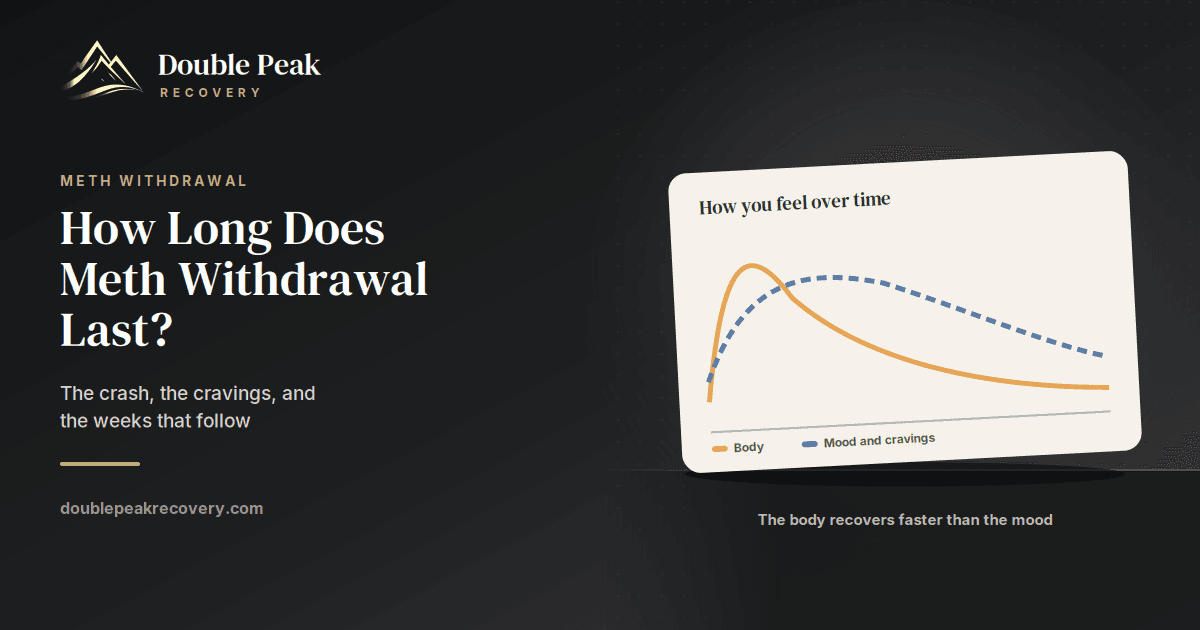
Cravings and low mood often last for weeks. Many people find the hardest part is not the crash but the flat, anxious stretch that follows it.
The meth withdrawal timeline varies with how long and how often you used, how you used, your mental health, and what else is in your system.
Thoughts of suicide, severe paranoia, chest pain, or confusion need immediate medical attention. Call 988 or 911.
Medical and counseling support can make the weeks after the crash safer, and it is easier to start before a relapse than after one.
Table of Contents
Cravings, low mood, and post-acute symptoms in the weeks that follow
Why professional support makes the weeks after the crash safer
Introduction
You stopped using, and now you feel worse than you did when you were using. You sleep for fourteen hours and still wake up wrung out. Nothing seems enjoyable. If that sounds familiar, or if you are watching someone you love go through it, you are probably asking one thing: when does this end?
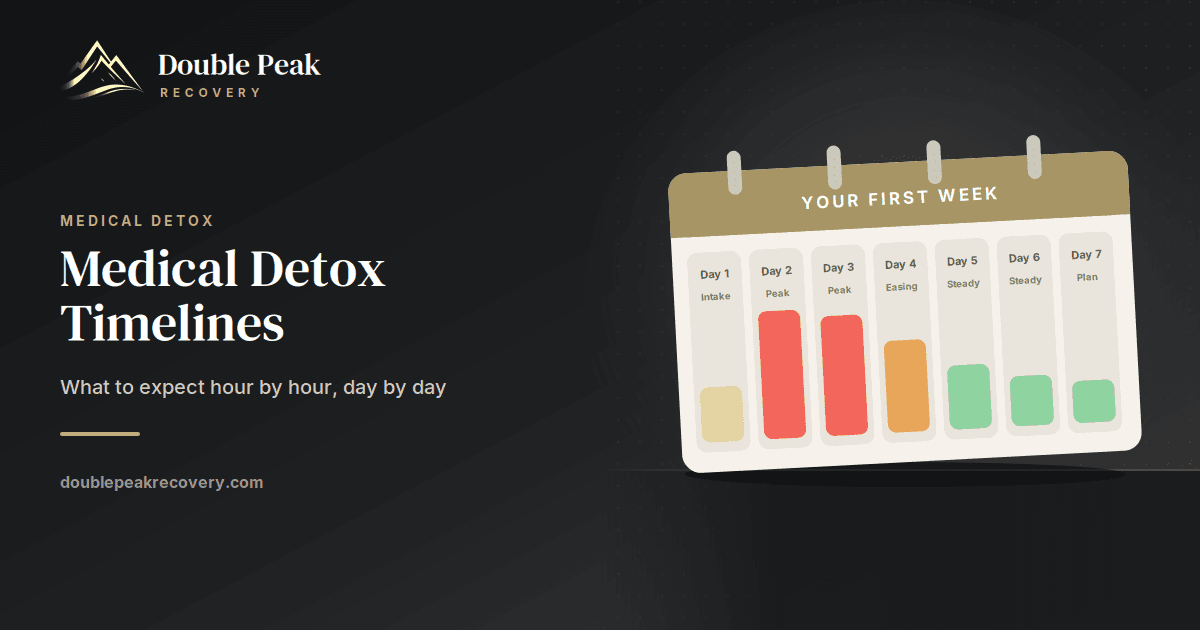
This article lays out the meth withdrawal timeline as plainly as we can: what the first days feel like, why the weeks after can be harder than people expect, and when to call for help. Unlike alcohol or opioid withdrawal, meth withdrawal is rarely dangerous to the body in the way that seizures are. The danger is mostly in the mind, and in what a person might do to make the feelings stop. If you want a broader look at detox across other substances, see our guide to medical detox timelines.
What is meth withdrawal and why does it happen?
Methamphetamine is a lab-made stimulant with high addiction potential. It produces euphoria, alertness, energy, and less appetite.[1] When you use it regularly, your brain adjusts to the flood of stimulation. When you stop, that adjustment does not reverse overnight.
Withdrawal is what that gap feels like. Your brain has been running hard on a drug, and without it you are left depleted: tired, flat, anxious, and craving the thing that made you feel normal. Long-term use can also bring insomnia and memory loss, which is part of why early recovery can feel foggy.[1]
Clinicians use the term substance use disorder when use continues despite harm and control is lost. The DSM-5-TR, the standard classification used by mental health professionals in the United States, defines it.[2] Withdrawal is one of the recognized features, but you do not need a formal diagnosis to deserve help.

The meth withdrawal timeline: day by day and week by week
No two people follow the same schedule. The table below shows a general pattern that clinicians commonly describe. It is a rough guide, not a promise. Our sources do not give exact day counts, so treat these ranges as typical experience rather than fixed rules.
Phase | Typical timing | What it often feels like |
|---|---|---|
The crash | First 1 to 3 days | Extreme tiredness, long sleep, big appetite, low mood, irritability |
Acute withdrawal | Roughly days 3 to 10 | Strong cravings, anxiety, trouble concentrating, restless or broken sleep |
Early post-acute | Weeks 2 to 4 | Low mood, little pleasure in things, cravings that come in waves |
Later recovery | Weeks to months | Mood and energy slowly improve, with some good days and bad days |
Think of the meth withdrawal timeline as a curve, not a cliff. Most people feel physically better sooner than they feel emotionally better, and that mismatch catches many of them off guard.

The crash: the first 24 to 72 hours
The crash often starts within a day of the last use. After days of being awake, your body demands sleep. Many people sleep for a day or more, wake up ravenous, then sleep again.
Common crash symptoms include:
Deep fatigue and sleeping far more than usual
Strong hunger after days of suppressed appetite[1]
Irritability, anxiety, or a heavy, hopeless mood
Foggy thinking and trouble remembering things
This is the first stage of the meth withdrawal timeline, and it is the one people most often try to escape by using again. If you can, make sure someone checks on you. A person in the crash can feel very low and not say so.

Cravings, low mood, and post-acute symptoms in the weeks that follow
Once the exhaustion lifts, the harder part often begins. Cravings can arrive suddenly, set off by a place, a person, a smell, or just a bad afternoon. Low mood and a lack of pleasure can settle in. Food, music, and time with friends may feel dull for a while.
These are sometimes called post-acute symptoms. They matter because this is the stretch of the meth withdrawal timeline where relapse is most tempting: you are no longer in crisis, but you do not yet feel well. Sleep problems can also linger, and long-term meth use is linked to insomnia.[1]
Weeks of flat mood are common and they usually ease, but they can feel endless while you are in them. That is a good reason not to go through them alone.

What affects how long meth withdrawal lasts?
Your own meth withdrawal timeline depends on several things:
How long and how often you used. Heavier, longer use generally means a rougher recovery.
How you used. Meth is most often smoked but can also be snorted, injected, or taken by mouth.[1] Smoking and injecting send the drug to the brain fast.
Mental health. Depression, anxiety, or trauma can make low mood harder and longer.
Other substances. Meth is often present in overdose deaths involving fentanyl, so mixed use raises the stakes.[1]
Sleep, food, and support. Rest, regular meals, and people around you tend to shorten the rough patches.
If alcohol is part of the picture, withdrawal from it can be dangerous in its own right. We explain why in our article on detoxing from alcohol at home.

Warning signs that need immediate medical attention
Most meth withdrawal does not need an emergency room. Some of it does. Get help right away if you or someone you love has:
Thoughts of suicide or self-harm. Call or text 988, the Suicide and Crisis Lifeline, which SAMHSA lists among its helplines.[3]
Severe paranoia, hearing or seeing things that are not there, or violent behavior
Chest pain, a racing or irregular heartbeat, or trouble breathing. Meth can cause rapid and irregular heartbeat and stroke.[1]
Confusion, fainting, or a seizure
Signs that fentanyl or other drugs were also used
If you are unsure, call 911. It is better to be told it was not an emergency than to wait.

Why professional support makes the weeks after the crash safer
The crash can be survived at home. The weeks after are where support changes outcomes. At Double Peak Recovery, our team can monitor your mood and sleep, watch for warning signs, and build a plan around your history. The ASAM Criteria, a set of guidelines for person-centered treatment planning for addiction and co-occurring conditions, is the standard many programs use to match people to the right level of care.[4]
Counseling helps with cravings and low mood, and it gives you people to call on the bad days. SAMHSA also offers a treatment locator at FindTreatment.gov if you want to compare options.[3] If cost is the worry, see how to pay for rehab in San Diego.
Frequently Asked Questions
Q: How long does meth withdrawal last?
A: The crash usually lasts a few days, and acute symptoms often fade within about two weeks. Low mood and cravings can continue for several weeks or longer. Your own meth withdrawal timeline depends on how much and how long you used.
Q: What are the most common meth withdrawal symptoms?
A: Heavy fatigue, long sleep, increased appetite, low mood, anxiety, irritability, trouble concentrating, and strong cravings. Insomnia and memory problems can also linger after long-term use.[1]
Q: Is meth withdrawal dangerous, and can it be done safely at home?
A: It is rarely dangerous physically, but it can be dangerous emotionally. Depression and suicidal thoughts are the main risks. Some people manage at home with close support. If you have thoughts of self-harm, severe paranoia, or chest pain, get medical help immediately.
Q: Why do meth cravings and depression last for weeks after quitting?
A: Your brain adjusted to heavy stimulation from the drug and needs time to recalibrate. Until it does, ordinary things can feel flat and cravings can return suddenly. This usually improves with time, sleep, and support.
Q: Is there a medication for meth withdrawal, and what treatments help recovery?
A: Our sources do not name an approved medication specifically for meth withdrawal, so we will not claim one. Treatment typically combines counseling, monitoring, sleep and nutrition support, and care for any depression or anxiety. A clinician can tell you what fits your situation.
Conclusion
The meth withdrawal timeline has a short, heavy start and a long, uneven tail. The crash passes in days. The cravings and low mood can take weeks, and that is the stretch where having help matters most. If you or someone you love is in it now, you do not have to white-knuckle it. Contact Double Peak Recovery at doublepeakrecovery.com and talk to someone today about what the next few weeks could look like.
References
National Institute on Drug Abuse. Methamphetamine. https://nida.nih.gov/research-topics/methamphetamine
American Psychiatric Association. Diagnostic and Statistical Manual of Mental Disorders (DSM-5-TR). https://www.psychiatry.org/psychiatrists/practice/dsm
Substance Abuse and Mental Health Services Administration. Substance Use Disorder Treatment. https://www.samhsa.gov/substance-use/treatment
American Society of Addiction Medicine. ASAM - American Society of Addiction Medicine. https://www.asam.org