10 min read
What to Bring to Rehab: The Complete Packing Checklist for Your First Week
Not sure what to bring to rehab? Use this first-week packing checklist for documents, clothing, medications, comfort items, and what to leave home.

Medically reviewed by Dr. Asad R. Hussain, M.D.
Board-certified psychiatrist · Medical Director · Last reviewed
TL;DR
Call the facility before you pack. Rules on clothing, electronics, and medications differ, and the admissions team can give you the exact list.
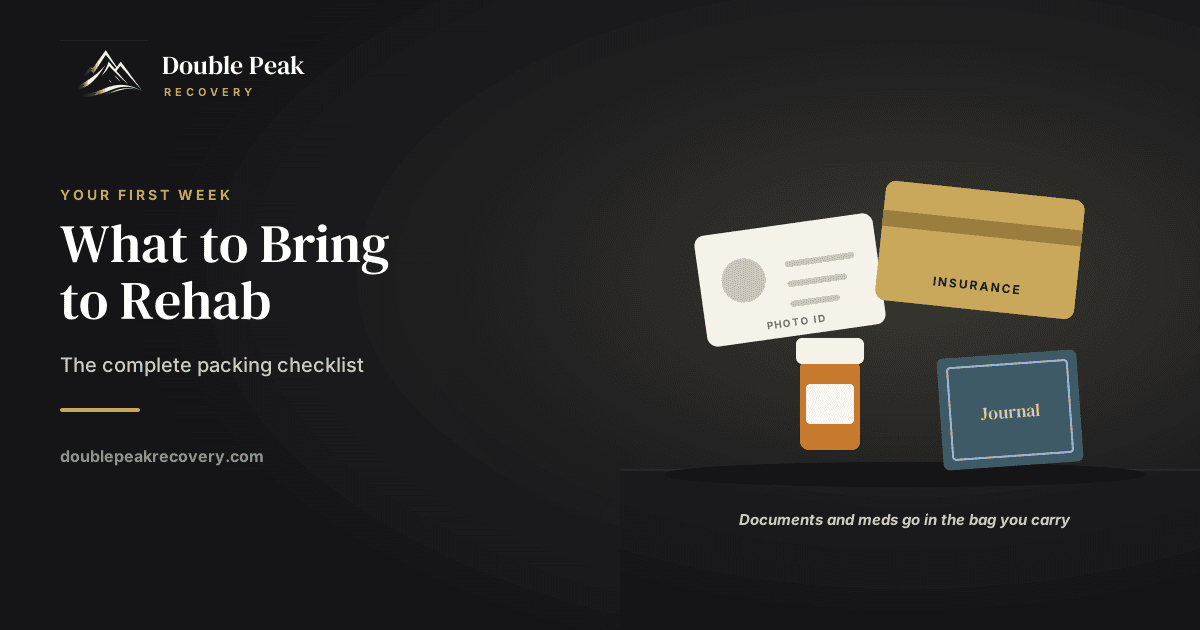
Bring a photo ID, your insurance card, and a current list of every medication you take, with doses.
Pack about 7 days of simple, comfortable clothing and unscented toiletries. Leave valuables, alcohol-based products, and anything you would hate to lose at home.
Bring original prescription bottles, not loose pills. Declare everything at check-in.
Pack light. Staff can help with what you forget.
Table of Contents
Before you pack: confirm your facility's rules and admission requirements
Medications and medical information: what to bring and what to declare
Comfort items and healthy routines: journals, books, and photos
Introduction
You have decided to go, and now there is a suitcase open on the bed and no idea what belongs in it. That is normal. Many people find that packing is the first small, concrete task that makes treatment feel real, and it can bring the fear back.
This guide covers what to bring to rehab for your first week, and what to leave behind. Use it as a starting point, then check it against your facility's own list. If you are a family member helping someone pack, the same advice applies. If you are still deciding where to go, our levels of care page explains the options, and SAMHSA's treatment locator at FindTreatment.gov can help you compare programs.[1]
Before you pack: confirm your facility's rules and admission requirements
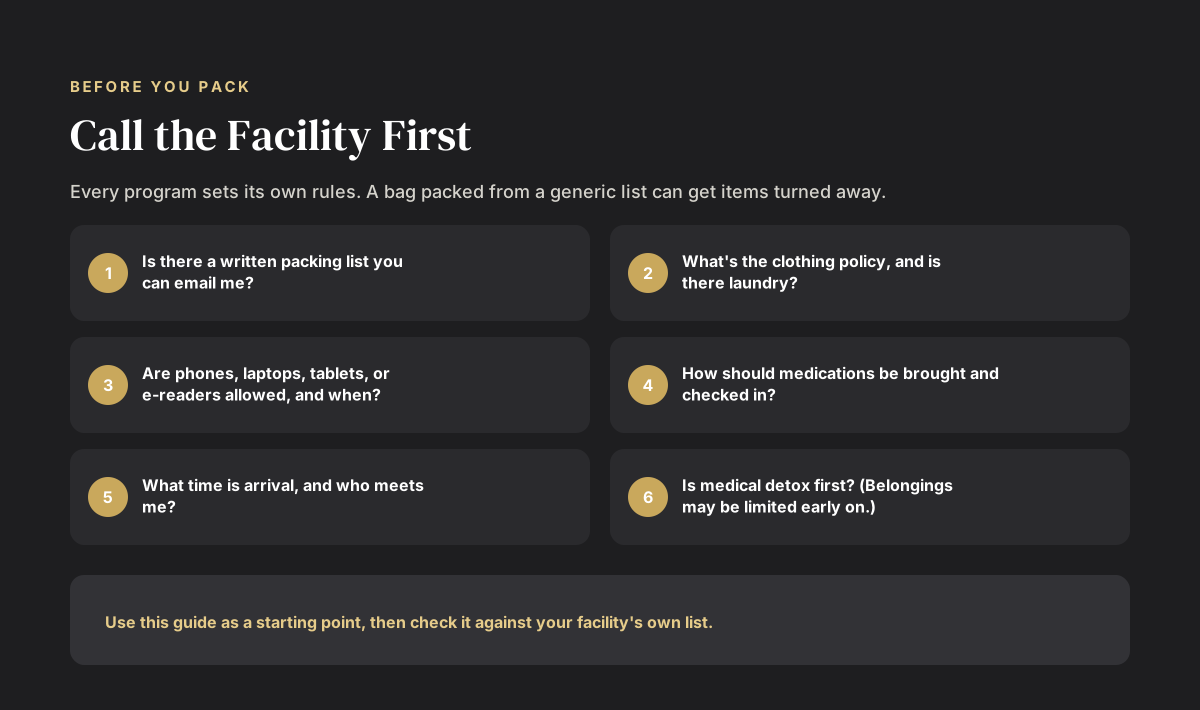
The best thing you can do about what to bring to rehab is call and ask. Every program sets its own rules, and a bag packed from a generic list can get items turned away at the door.
Ask these questions before you buy anything:
Is there a written packing list, and can it be emailed to you?
What is the clothing policy, including laundry access?
Are phones, laptops, tablets, or e-readers allowed, and when?
How should medications be brought and checked in?
What time is arrival, and who meets you?
Is a medical detox stay first? If so, your belongings may be limited for the first few days.
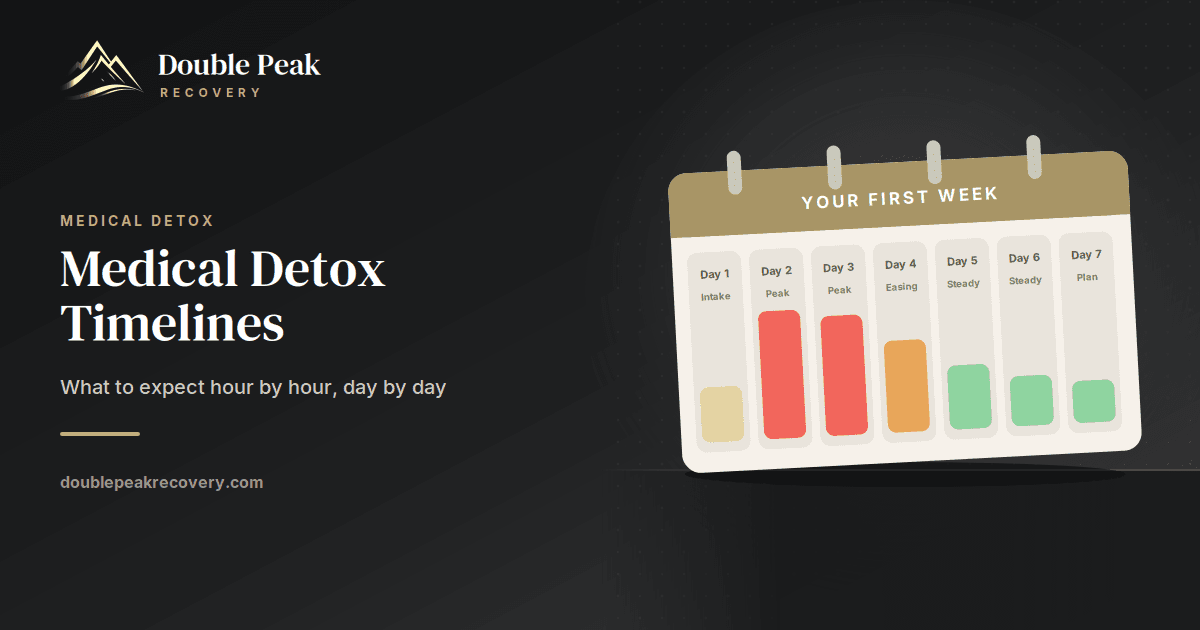
If you are starting with detox, you may be in a medical unit before you move into a residential program. Our medical detox programs page explains how that works, and our guide to medical detox timelines shows what the first days look like.
Essential documents, ID, and insurance information
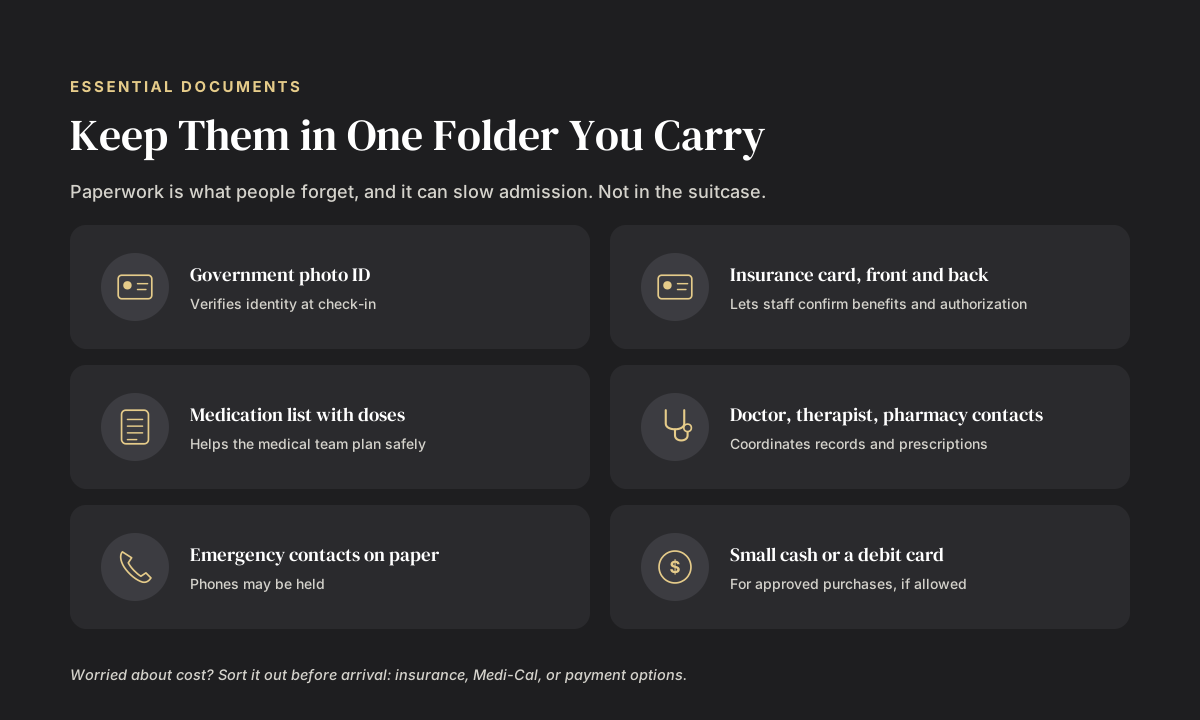
Paperwork is the part people forget, and it can slow admission. Keep it in one folder in your carry-on or personal bag, not buried in a suitcase.
Item | Why it matters |
|---|---|
Government photo ID (driver's license, passport, or state ID) | Needed to verify identity at check-in |
Insurance card (front and back) | Lets staff confirm benefits and authorization |
List of current medications and doses | Helps the medical team plan safely |
Names and numbers of your doctors, therapist, and pharmacy | Allows records and prescriptions to be coordinated |
Emergency contacts, written down | Phones may be held, so do not rely on your contact list |
Small amount of cash or a debit card | For approved purchases, if the facility allows them |
If you are worried about cost, sort that out before arrival. Our article on how to pay for rehab in San Diego walks through insurance, Medi-Cal, and payment options. SAMHSA also lists ways to find coverage if you have private insurance, Medicare, or Medicaid.[1]
Clothing and personal care items for your first week
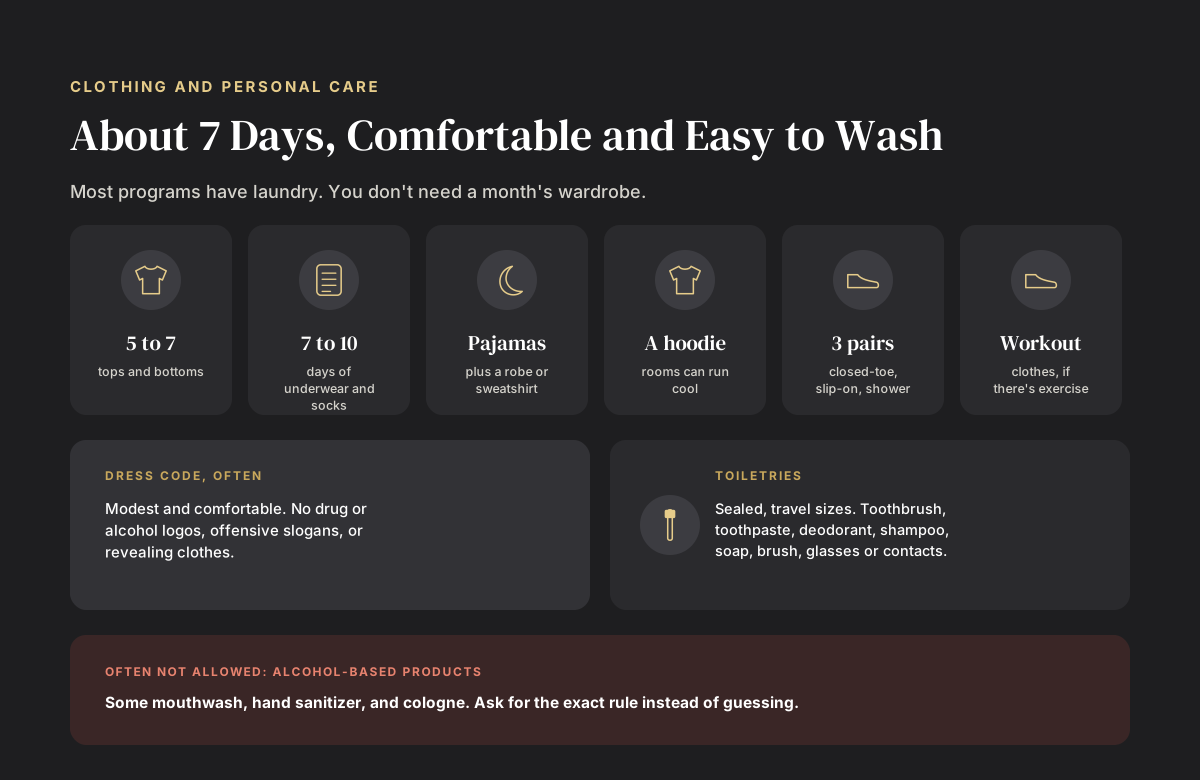
Plan for about 7 days of clothes, plus a few extras. Most programs have laundry, so you do not need a month's wardrobe. Choose what is comfortable, modest, and easy to wash.
5 to 7 tops and 5 to 7 bottoms, including sweatpants or jeans
Underwear and socks for 7 to 10 days
Pajamas and a light robe or sweatshirt
A jacket or hoodie, since rooms can run cool
Closed-toe shoes, slip-on shoes, and shower shoes
Workout clothes, if the program has exercise or yoga
Many facilities ask that clothing carry no drug or alcohol logos, no offensive slogans, and nothing revealing. Ask about this when you call.
For toiletries, bring the basics in sealed, travel-friendly sizes: toothbrush, toothpaste, deodorant, shampoo, soap, razors if permitted, a hairbrush, and any glasses, contacts, or hygiene items you rely on. Many programs prohibit products with alcohol in them, such as some mouthwash, hand sanitizer, and cologne, because they can be misused. Ask for the exact rule instead of guessing.
Medications and medical information: what to bring and what to declare
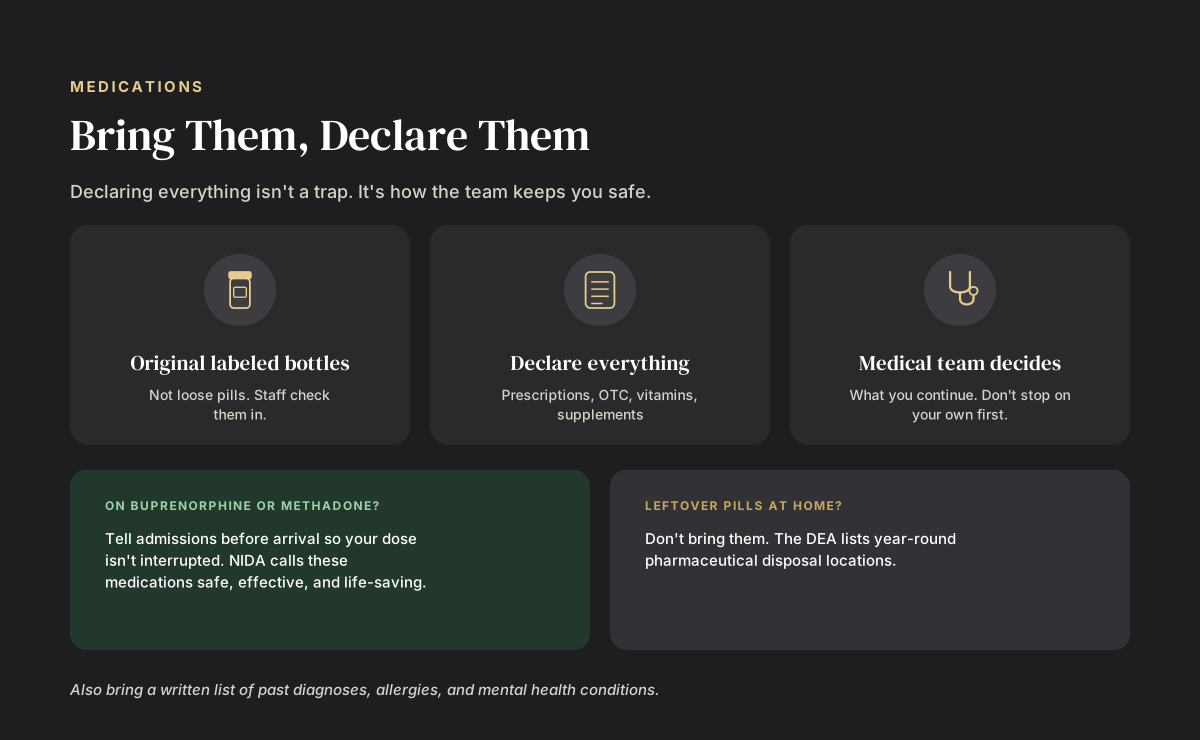
Tell the medical team about everything you take. That includes prescriptions, over-the-counter products, vitamins, and supplements. Honest detail here protects you, especially if alcohol, opioids, or benzodiazepines are involved, because withdrawal can be medically serious.
Bring medications in their original labeled pharmacy bottles. Staff will check them in, and the medical team decides what you continue. Do not stop a prescribed medication on your own before you arrive, and do not hide substances in your bag. Declaring them is not a trap. It is how the team keeps you safe.
Medications can be part of treatment itself. NIDA describes medications for opioid use disorder as safe, effective, and life-saving.[2] If you take buprenorphine or methadone, tell admissions before arrival so your dose is not interrupted. For alcohol, NIAAA maintains a treatment navigator that explains the options.[3]
If you have leftover pills at home that you no longer need, do not bring them. The DEA lists year-round pharmaceutical disposal locations.[4] Bring a written list of past diagnoses, allergies, and any mental health conditions too. If you have both substance use and mental health needs, our dual diagnosis treatment team will want that history from day one.
Comfort items and healthy routines: journals, books, and photos
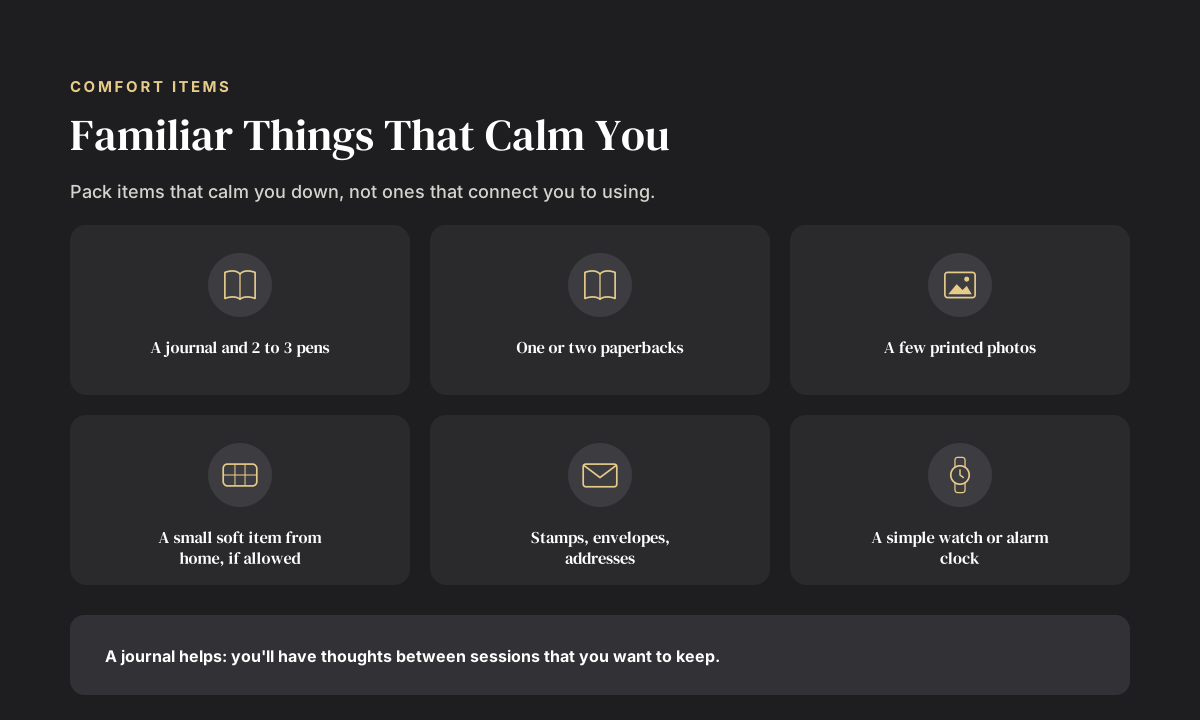
The first week can feel raw and strange, and a few familiar things help. Pack items that calm you down, not ones that connect you to using.
A blank journal and two or three pens
One or two paperback books, or recovery reading you already own
A few printed photos of people who matter to you
A small, soft item such as a blanket or pillowcase from home, if allowed
Stamps, envelopes, and addresses, since letters are often welcome
A simple watch or alarm clock, since schedules matter
Programs often build the day around groups, meals, and therapy. Our therapies overview describes what fills those hours. A journal is useful because you will have thoughts between sessions that you want to keep.
What not to bring: prohibited and restricted items
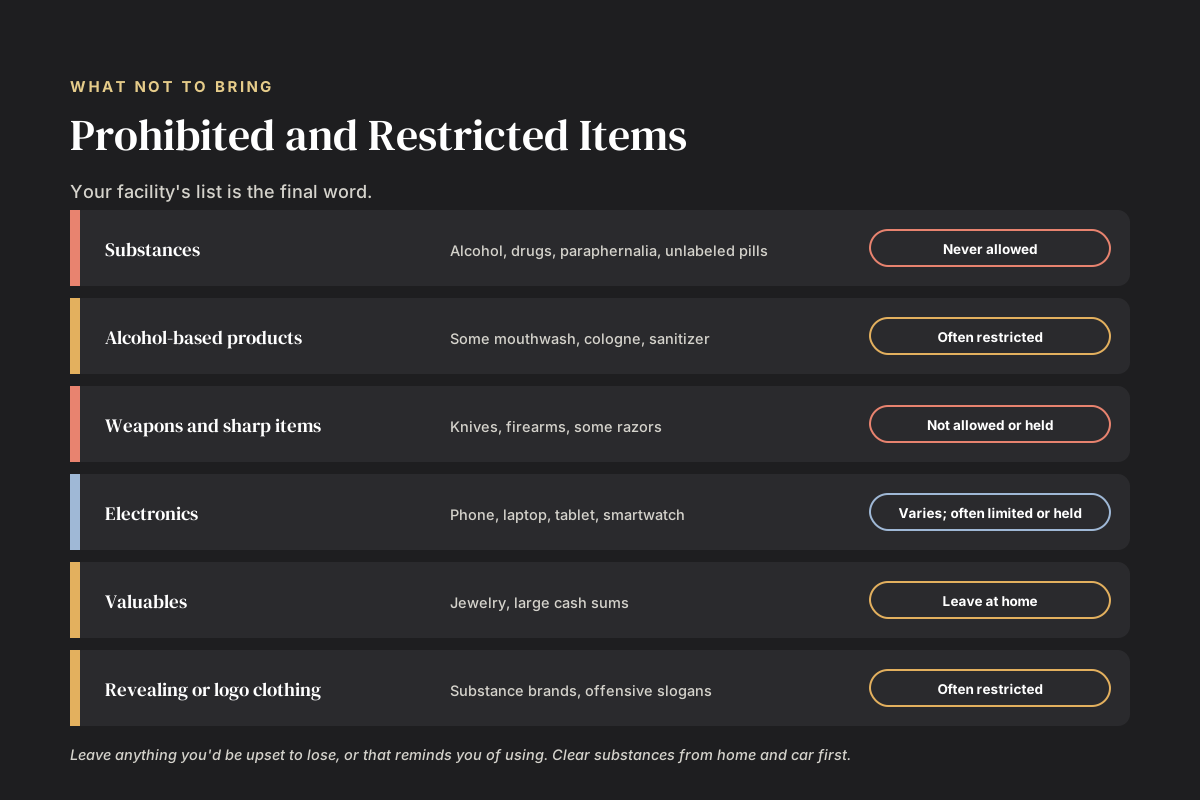
Rules exist to protect everyone in the building. Most programs ban the same few groups of items, but your facility's list is the final word.
Category | Examples | Usual policy |
|---|---|---|
Substances | Alcohol, drugs, paraphernalia, unlabeled pills | Never allowed |
Alcohol-based products | Some mouthwash, cologne, sanitizer | Often restricted |
Weapons and sharp items | Knives, firearms, some razors | Not allowed or held |
Electronics | Phone, laptop, tablet, smartwatch | Varies; often limited or held |
Valuables | Jewelry, large cash sums | Leave at home |
Revealing or logo clothing | Substance brands, offensive slogans | Often restricted |
Leave behind anything you would be upset to lose, plus anything that reminds you of using. Before you go, remove any remaining substances from your home or car, and do not bring any with you "just in case."
Final checklist and tips for arrival day
Pack the night before, and put paperwork and medications in a bag you carry yourself. Eat something, sleep if you can, and arrange your ride. Do not drive yourself if you are intoxicated or in early withdrawal. If you are unsure whether you can stop safely first, read our guide on detoxing from alcohol at home.
Here is a short version of what to bring to rehab:
Photo ID, insurance card, and doctor contacts
Original medication bottles and a written medication list
7 days of comfortable clothing, shoes, and sleepwear
Alcohol-free toiletries in sealed containers
Journal, pens, a book, photos, and written phone numbers
If you are in crisis right now, call the SAMHSA National Helpline at 1-800-662-HELP (4357), or call or text 988.[1][2] Treatment is also a medical field with professional standards. ASAM, founded in 1954, represents more than 8,000 addiction medicine physicians and clinicians, and publishes the criteria used to match people to a level of care.[5]
Frequently Asked Questions
Q: What should I bring to rehab for the first week?
A: Bring photo ID, your insurance card, original medication bottles, a medication list, about 7 days of comfortable clothing, basic toiletries, and a journal. Confirm the facility's list first.
Q: Can I bring my prescription medications to rehab?
A: Usually yes, in the original labeled bottles. Staff will check them in and the medical team decides what you continue. Tell admissions ahead of time if you take medications such as buprenorphine, methadone, or a benzodiazepine.
Q: What items are not allowed in rehab?
A: Alcohol, drugs, and paraphernalia are never allowed. Weapons, sharp items, alcohol-based products, revealing or logo clothing, and valuables are commonly banned or restricted. Ask for your facility's written list.
Q: Can I bring my phone, laptop, or other electronics to rehab?
A: It depends on the program. Many limit or hold electronics, at least early on, so you can focus on treatment. Ask before you pack, and write important phone numbers on paper.
Q: How much clothing should I pack for rehab, and are there dress code rules?
A: Pack about 7 days of clothing, since most programs have laundry. Dress codes usually call for modest, comfortable clothes without drug or alcohol logos or offensive slogans.
Conclusion
Knowing what to bring to rehab will not make treatment easy, but it removes one worry on a hard day. Call ahead, bring your documents and medications, pack light and simple, and leave the rest at home.
If you are ready to start, or if you have questions about what to bring to rehab at Double Peak Recovery, contact our admissions team through our website. We will tell you exactly what to pack, answer what you are afraid to ask, and plan for life after treatment through our aftercare and alumni program.
References
Substance Abuse and Mental Health Services Administration. SAMHSA Home: Helplines and Treatment Locators. - https://www.samhsa.gov
National Institute on Drug Abuse. NIDA: Medications for Opioid Use Disorder and Treatment Resources. - https://nida.nih.gov
National Institute on Alcohol Abuse and Alcoholism. NIAAA Alcohol Treatment Navigator and Resources. - https://www.niaaa.nih.gov
U.S. Drug Enforcement Administration, Diversion Control Division. Year Round Pharmaceutical Disposal. - https://www.deadiversion.usdoj.gov
American Society of Addiction Medicine. ASAM Home and The ASAM Criteria. - https://www.asam.org