
Levels of care
Medication-Assisted Treatment (MAT) in Escondido, CA
Physician-Directed MAT for Opioid & Alcohol Use Disorder
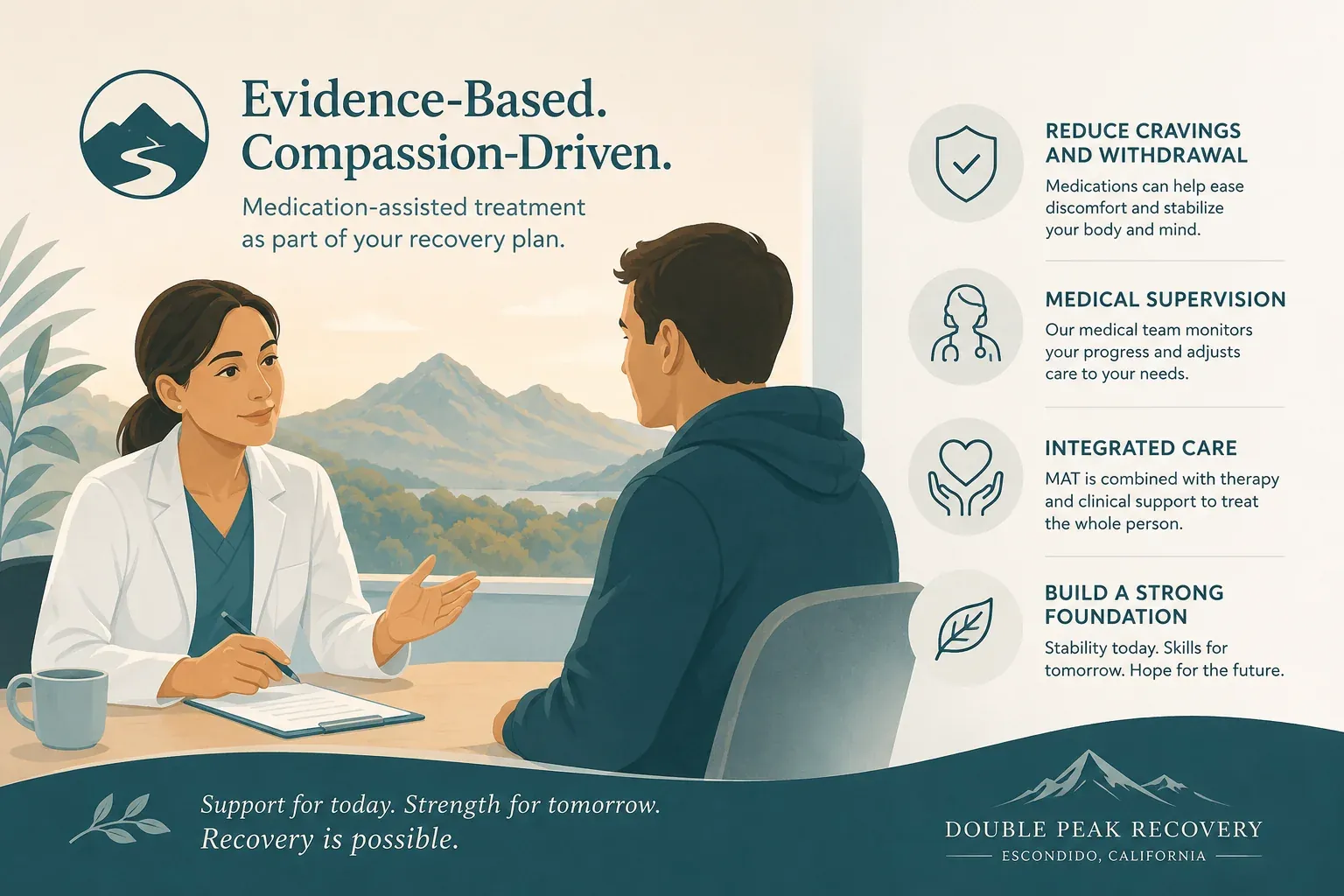
Medication-assisted treatment (MAT) combines FDA-approved medications with counseling and behavioral therapy to treat opioid and alcohol use disorder. At Double Peak Recovery in Escondido, MAT is physician-directed: our medical team decides whether a medication fits you, which one, and when to start it, then adjusts the plan as you move through detox and treatment. We are licensed by the California Department of Health Care Services (DHCS License #370261AP) and serve clients throughout San Diego County.
Medication is never the whole treatment. It eases withdrawal and quiets cravings so you can do the work of recovery — individual and group therapy, family involvement, relapse-prevention planning — with a clearer head. If you or someone you love is struggling with opioids or alcohol, call (760) 579-1109. Our admissions team answers 24 hours a day.
Medications Used in Our MAT Program
Every medication below is FDA-approved, and none is started without a medical evaluation. Your protocol depends on the substance, your health history and your goals.
- 01
Buprenorphine (Suboxone®)
Buprenorphine is a partial opioid agonist: it relieves withdrawal symptoms and cravings without the high of heroin, fentanyl or prescription painkillers. Suboxone combines buprenorphine with naloxone and dissolves under the tongue. It is started once you are in early withdrawal, usually at least 12 to 24 hours after the last use of short-acting opioids, because starting too soon can bring on sudden, intense withdrawal. After fentanyl, the timing needs more care, and our physicians plan it individually.
- 02
Naltrexone (Vivitrol® or daily tablet)
Naltrexone blocks opioid receptors, so opioids lose their effect, and it reduces craving for alcohol. It is not addictive and produces no high. Vivitrol is an extended-release injection given once a month; naltrexone also comes as a daily tablet. Because it blocks opioids, it can only begin after withdrawal is complete: generally at least 7 days after short-acting opioids, and 10 to 14 days after long-acting ones.
- 03
Tapering & comfort medications
Not every MAT plan uses a long-term medication. For alcohol and benzodiazepine withdrawal, a medically managed taper is the standard of care to prevent seizures and other dangerous complications. Non-addictive comfort medications treat specific symptoms — sleep, nausea, anxiety, blood pressure — so no one is left to white-knuckle through detox.
How MAT Works at Double Peak Recovery
MAT follows you through each level of care rather than stopping when detox ends.
- 01
Medical assessment
On arrival, our medical team reviews your substance use history, current medications, physical and mental health, and any past experience with MAT. That evaluation decides whether medication is appropriate, and which one.
- 02
Stabilize in detox
In medical detox, nurses monitor you around the clock while medication eases withdrawal. For opioids, this is usually where Suboxone is started; for alcohol, a supervised taper keeps withdrawal safe.
- 03
Continue through residential and IOP
Medication works best alongside therapy. As you move into residential treatment and then IOP, our physicians review your dose and response while your counselors build relapse-prevention skills around it.
- 04
Plan for after discharge
Before you leave, your discharge plan sets out how your medication continues, who will prescribe it and what support is in place, so there is no gap in care at one of the riskiest points in recovery.
Suboxone vs. Vivitrol: Comparing MAT Options
Both medications reduce cravings and support long-term recovery from opioid use disorder, but they work in opposite ways. Suboxone partly activates the same receptors as other opioids, which is why it prevents withdrawal; Vivitrol blocks them, which is why opioids must clear your system before the first dose. Your physician will recommend one based on your history and goals.
| Medication | Treats | How it's taken | When it starts |
|---|---|---|---|
| Buprenorphine (Suboxone®) | Opioid use disorder | Film or tablet dissolved under the tongue, usually daily | In early withdrawal, typically at least 12–24 hours after last short-acting opioid use |
| Naltrexone injection (Vivitrol®) | Opioid use disorder and alcohol use disorder | Injection once a month | After withdrawal is complete: at least 7 days opioid-free (10–14 days after long-acting opioids) |
| Naltrexone tablet | Alcohol use disorder and opioid use disorder | Tablet taken daily | After detox is complete |
Buprenorphine (Suboxone®)
- Treats
- Opioid use disorder
- How it's taken
- Film or tablet dissolved under the tongue, usually daily
- When it starts
- In early withdrawal, typically at least 12–24 hours after last short-acting opioid use
Naltrexone injection (Vivitrol®)
- Treats
- Opioid use disorder and alcohol use disorder
- How it's taken
- Injection once a month
- When it starts
- After withdrawal is complete: at least 7 days opioid-free (10–14 days after long-acting opioids)
Naltrexone tablet
- Treats
- Alcohol use disorder and opioid use disorder
- How it's taken
- Tablet taken daily
- When it starts
- After detox is complete
Is MAT Right for You?
MAT may be a good fit if any of these sound familiar:
- You have tried to stop opioids or drinking before, and withdrawal or cravings pulled you back.
- You use fentanyl, heroin or prescription opioids and are worried about overdose.
- Cravings are constant enough to crowd out everything else.
- You have relapsed after a period of recovery.
- You want a medication option for alcohol use disorder alongside therapy.
The only way to know for sure is an assessment. Our physicians will talk through the benefits, side effects and expected length of any medication before you start it.
Medication-Assisted Treatment for Alcohol
MAT is not only for opioids. Three medications are FDA-approved for alcohol use disorder: naltrexone, acamprosate and disulfiram. Naltrexone, as a daily tablet or the monthly Vivitrol injection, reduces craving and the rewarding effect of drinking. Acamprosate helps the brain regain its balance after long-term drinking, and disulfiram causes an unpleasant reaction if you drink.
These medications start once withdrawal is over. During alcohol detox itself, a supervised taper keeps you safe. Our medical director evaluates every client for whether one of them is appropriate.
Does Insurance Cover MAT?
Many insurance plans cover medication-assisted treatment, including Suboxone and Vivitrol, as part of addiction treatment, but coverage for specific medications and for how long varies by plan. We accept most PPO insurance plans, and private-pay and financing plans are also available. Unfortunately, we are unable to accept Medicaid and Medi-Cal at this time.
Related Care at Double Peak Recovery
- Detox Programs: medically supervised withdrawal, 24/7
- Fentanyl & Heroin Detox: opioid withdrawal management
- Alcohol Detox: safe, monitored alcohol withdrawal
- Residential Treatment: continued care at the same address
- IOP / Outpatient: structured treatment while living at home
- Aftercare & Alumni: support after you complete treatment
Sources & Resources
Questions
Frequently asked questions
What is medication-assisted treatment?
Medication-assisted treatment (MAT) is the use of FDA-approved medications, such as buprenorphine (Suboxone) and naltrexone (Vivitrol), together with counseling and behavioral therapy to treat opioid and alcohol use disorder. The medication eases withdrawal and cravings; the therapy treats what is behind the substance use. At Double Peak Recovery in Escondido, MAT is directed by our physicians and adjusted throughout your stay.
Does insurance cover Suboxone and Vivitrol?
Many insurance plans cover Suboxone and Vivitrol as part of addiction treatment, but coverage varies by plan and by medication. We accept most PPO plans and can check your benefits before admission. We are unable to accept Medicaid or Medi-Cal at this time.
How long do you stay on Suboxone?
There is no set length. SAMHSA notes that buprenorphine treatment is tailored to each person and in some cases can continue indefinitely. Some people taper off after months; others stay on it longer because it keeps them stable. Any decision to taper is made with your prescriber and done gradually, never abruptly.
Can MAT be used for alcohol?
Yes. Naltrexone (a daily tablet or the monthly Vivitrol injection), acamprosate and disulfiram are FDA-approved for alcohol use disorder. They are started after alcohol withdrawal is complete; during detox, a supervised taper manages withdrawal safely.
Is MAT effective?
Yes. According to the National Institute on Drug Abuse, FDA-approved medications for opioid use disorder reduce opioid use, and people treated with buprenorphine are less likely to overdose or die than people who go untreated. MAT works best combined with counseling and ongoing support.
Can I continue MAT after I leave treatment?
Yes. Many people continue their medication after residential treatment. Before you discharge, your treatment team sets out how your medication continues and who will prescribe it, so you are not left without it.