9 min read
Rehabilitation of Alcohol in Escondido: How Double Peak Recovery Helps You Stop Drinking Safely
Learn how the rehabilitation of alcohol works at Double Peak Recovery in Escondido, CA: safe medical detox, residential care, and support to stay sober.


Medically reviewed by Dr. Asad R. Hussain, M.D.
Board-certified psychiatrist · Medical Director · Last reviewed
Rehabilitation of Alcohol in Escondido: How Double Peak Recovery Helps You Stop Drinking Safely
If drinking has started running your life, or you are watching someone you love struggle to stop, it helps to know exactly what treatment looks like before you pick up the phone. This guide explains how the rehabilitation of alcohol works, from the first days of medical detox through residential treatment and the plan that follows you home. It also explains how care works at Double Peak Recovery, a small licensed detox and residential program in Escondido, CA.
What Is the Rehabilitation of Alcohol?
Alcohol rehabilitation is a structured, medically guided treatment process that helps a person stop drinking safely, get through withdrawal, and build the skills to stay sober. The National Institute on Alcohol Abuse and Alcoholism describes alcohol use disorder as a medical condition marked by trouble controlling drinking despite harm to health, work, or relationships. It ranges from mild to severe, and it is treatable.
People use several terms for the same struggle. Alcohol abuse usually means a drinking pattern that causes problems. Alcohol dependence means the body has adapted to alcohol and reacts with withdrawal symptoms when drinking stops. Alcohol addiction describes compulsive use that continues despite negative consequences. Whatever word fits, the path forward is the same: medical treatment first, then therapy and support.
Effective alcohol treatment has four goals:
Physical safety while you manage withdrawal
Stabilizing mood, sleep, and health
Learning coping skills and relapse prevention
A clear plan for continued support after discharge
Signs It May Be Time for Alcohol Rehab
Many people wait because they are not sure their drinking problem is "bad enough." You do not need to hit rock bottom. These signs suggest it is time to talk with a professional:
You need more alcohol to feel the same effect
You get shaky, sweaty, nauseous, or anxious a few hours after your last drink
You drink alcohol in the morning to feel normal
You have tried to cut back or quit drinking and could not
Drinking has caused blackouts, a DUI, missed work, or arguments at home
Family members have told you they are worried
If you recognize yourself here, a confidential call to an admissions team can help you sort out what level of care fits. You can reach Double Peak Recovery at 760-579-1109.
When Alcohol Withdrawal Is an Emergency
Alcohol withdrawal happens when someone who has been drinking heavily stops or cuts back. The nervous system, used to alcohol slowing it down, swings the other way. For some people that means mild anxiety and poor sleep. For others it means seizures or delirium tremens, which can be fatal without medical care.
Call 911 or go to the nearest emergency room for any of these:
A seizure
Hallucinations
Severe confusion or not knowing where you are
Vomiting you cannot stop
Chest pain or a racing heart
High fever with heavy sweating and agitation
People who drink every day, have had withdrawal seizures before, or have heart or liver problems should not try to stop drinking alone at home. Medically supervised detox is the safer choice. Double Peak Recovery provides 24-hour detox care, but it is not an emergency room. If someone has emergency symptoms, get emergency care first; detox can follow once they are stable. For a closer look at how symptoms change hour by hour, see our alcohol withdrawal timeline.
Levels of Care: From Detox to Outpatient
Alcohol treatment is matched to the person. A clinical assessment looks at how much and how long you have been drinking, your withdrawal history, your physical and mental health, and your home situation. That assessment decides where treatment programs should start.
Inpatient detoxification: 24-hour care while the body clears alcohol and withdrawal is managed with medication.
Residential treatment: You live on site with daily therapy, group sessions, and round-the-clock staff.
Intensive outpatient (IOP): Several hours of therapy a few days a week while living at home or in sober living.
Outpatient services: Weekly or biweekly therapy sessions.
Peer support groups: Alcoholics Anonymous, SMART Recovery, and similar groups for ongoing accountability.
Double Peak Recovery focuses on the two most intensive early stages: medical alcohol detox and residential treatment, in the same building. Clients move from detox into residential care without a transfer to another facility, which removes one of the most common points where people drop out. Our levels of care page explains each stage in more detail.
Inpatient Care | Outpatient Services | |
|---|---|---|
Setting | Live on site, 24-hour staff | Live at home or in sober living |
Intensity | Daily therapy and groups | A few hours a week |
Best fit | Physical dependence, prior withdrawal problems, unstable home | Milder drinking problem, stable support at home |
Step One: Medical Alcohol Detox at Double Peak Recovery
For most people with physical alcohol dependence, detox is the first step in the rehabilitation of alcohol. At Double Peak, it starts with a full intake: drinking history, past detox attempts, other substance use, medications, mental health, and vital signs.
What happens during inpatient detoxification:
Withdrawal scoring. Nursing staff use the CIWA-Ar, a standard alcohol withdrawal scale, to track symptoms and guide medication.
Medication to manage withdrawal. The medical team prescribes medication based on symptom severity to prevent seizures and ease shakiness, anxiety, nausea, and insomnia.
Nutrition and rest. Vitamins such as thiamine, fluids, regular meals, and a quiet place to sleep.
Around-the-clock monitoring. Staff are on site 24 hours a day, and our medical team is led by board-certified psychiatrist Dr. Asad Hussain.
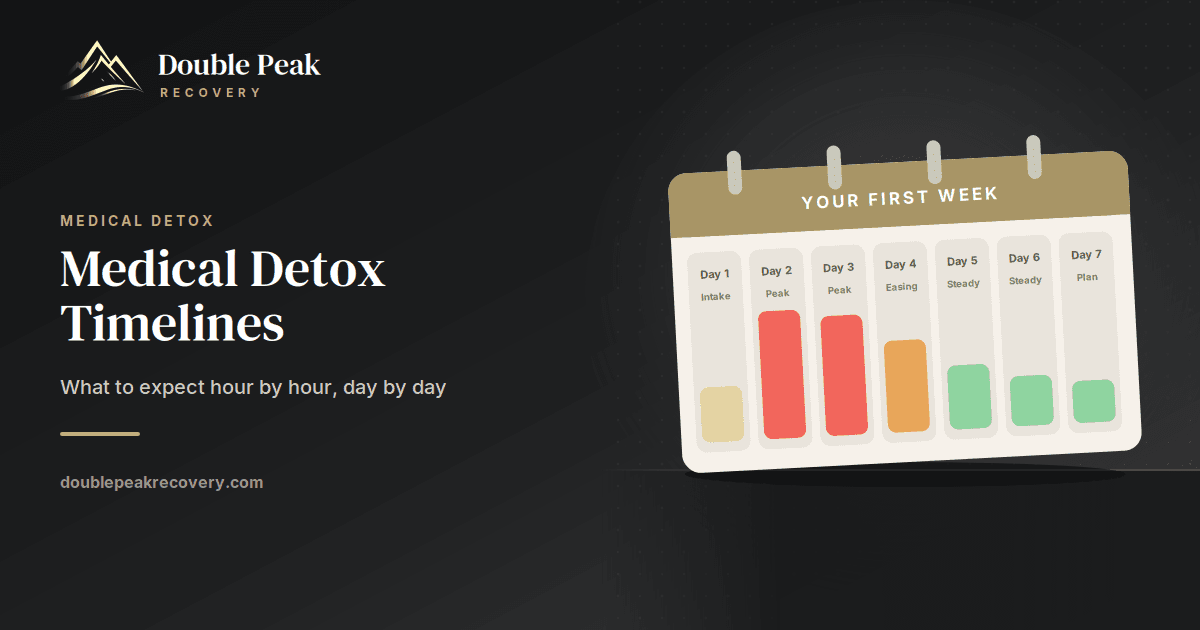
Most alcohol detox takes about a week, depending on how much a person was drinking and their health. A common worry is being sedated the whole time. The goal is the opposite: medication is used to keep you safe and comfortable, not to knock you out.
Step Two: Residential Alcohol Treatment in Escondido
Once withdrawal is under control, clients continue into residential treatment in the same home. Double Peak has six beds, so every client is known by name, and the staff who saw you through detox are the same people you see in residential care. Length of stay depends on clinical need and insurance; many clients stay about 30 days.
A typical day is built around structured group sessions of about 45 minutes each, along with individual therapy and time for meals, rest, and exercise. Groups include:
Cognitive behavioral therapy (CBT) and dialectical behavior therapy (DBT) skills
Relapse prevention and triggers and coping skills
Psychoeducation on alcohol use disorder and recovery
Process group, gratitude group, and daily reflection
Mindfulness and meditation
Family dynamics
Recovery fellowship and experiential outings
The home also has an on-site gym and group room, so exercise is part of the routine. Each client works with a primary therapist on a written treatment plan, with case management to line up the next steps before discharge.
Alcohol Treatment Medications That Reduce Cravings
Medication is one of the most underused tools in alcoholism treatment. Three FDA approved medications treat alcohol use disorder, and none of them are addictive:
Naltrexone (a daily pill or a monthly injection) blunts the rewarding effect of alcohol and helps reduce alcohol cravings.
Acamprosate helps restore balance in brain chemistry after drinking stops and reduces cravings in early recovery.
Disulfiram causes an unpleasant reaction if you drink alcohol, which works best when someone helps you stay consistent with it.
Most Double Peak clients receive medication support from our medical team during their stay. When alcohol treatment medications are a good fit, they can be started during treatment and continued after discharge with a local provider. They are not a cure on their own, but paired with therapy they can make it easier to prevent relapse in the first months.
Treating Mental Health and Alcohol Use Together
Many people who drink heavily also live with anxiety, depression, trauma, or trouble sleeping. When one is treated and the other is ignored, relapse risk goes up. The Substance Abuse and Mental Health Services Administration recommends treating co-occurring conditions at the same time.
At Double Peak, dual diagnosis care is part of the program from the start. Psychiatric oversight, individual therapy, and group therapy work together, so mental health is addressed alongside drinking rather than after it.
Family members often want to help but do not know how. Family dynamics groups and family conversations during treatment can rebuild trust and family relationships, and help loved ones learn healthy boundaries. Al-Anon is a good outside resource for families as well.
After Rehabilitation of Alcohol: Building a Plan That Lasts
Recovery does not end at discharge. The first few months home carry the highest relapse risk, so planning starts well before the last day. Before a client leaves Double Peak, the team builds an aftercare plan with discharge appointments scheduled and medications listed. A strong plan usually includes:
Step-down care: An intensive outpatient program or outpatient therapy near home.
Medication follow-up: A local provider to continue alcohol treatment medications or psychiatric medication.
Support groups: Regular AA, SMART Recovery, or other peer meetings.
A relapse prevention plan: Your personal triggers, a coping plan for each one, people to call, and what to do if you slip.
A stable place to live: Many people do well in a structured sober living home for added support in early recovery.
Double Peak's aftercare and alumni program helps clients stay connected after they leave. If you are worried about your job while you are away, read our guide to FMLA leave for rehab.
Why Choose Double Peak Recovery for Alcohol Rehab in Escondido
Double Peak Recovery is a six-bed treatment facility in Escondido, licensed by the California Department of Health Care Services and certified by LegitScript. Clients come from Escondido, San Marcos, San Diego, and across North County.
Detox and residential treatment under one roof, with no transfer in between
24-hour staff and a medical team led by a board-certified psychiatrist
A small, personal setting with only six clients at a time
Evidence-based therapy, medication support, and dual diagnosis care
Discharge planning that schedules your next appointments before you leave
Double Peak works with many PPO insurance plans. You can verify your insurance online, or read how PPO coverage for detox and residential care in California works.
If you or someone you love is ready to stop drinking, call Double Peak Recovery at 760-579-1109 for a confidential conversation, or contact us online. The rehabilitation of alcohol starts with one call, and it can happen sooner than you think.
Last updated: November 2026