9 min read
Functional Alcoholic Signs: 9 Warning Signs Hiding Behind a Successful Life
Functional alcoholic signs are easy to miss when work and home look fine. Learn 9 warning signs, how AUD is diagnosed, and what to do next.

Medically reviewed by Dr. Asad R. Hussain, M.D.
Board-certified psychiatrist · Medical Director · Last reviewed
TL;DR
"Functional alcoholic" is a popular phrase, not a medical diagnosis. The clinical term is alcohol use disorder (AUD), rated mild, moderate, or severe.
Functional alcoholic signs often show up in routines and private habits: drinking to unwind every day, hiding bottles, needing more to feel the same effect.
A good job, a nice home, and no DUI do not rule out AUD. Doctors diagnose it with 11 criteria, and meeting just 2 in a year is enough.
Talk to a loved one privately and calmly, with specific examples. Do not wait for a crisis.
Stopping heavy drinking suddenly can be dangerous. Medical detox is the safer starting point.
Table of Contents
What is a functional alcoholic? Understanding the high-functioning myth
9 functional alcoholic signs hiding behind a successful life
Why functioning alcoholics often go unnoticed (and why denial persists)
The hidden health, relationship, and career risks of functioning alcoholism
How to talk to someone showing signs of a functioning alcoholic
Introduction
He coaches Little League. She runs a department of forty people. Both pour a drink at 5:30 every evening, and both would tell you they have it under control. If you are reading about functional alcoholic signs, you may be wondering about yourself, or about someone you love who looks fine from the outside.
This guide covers nine warning signs, why they are so easy to explain away, and what the medical definition of a problem is. It also covers how to start a conversation and where to go for help. Nothing here is a verdict. It is a way to look clearly at something that is hard to look at.
What is a functional alcoholic? Understanding the high-functioning myth
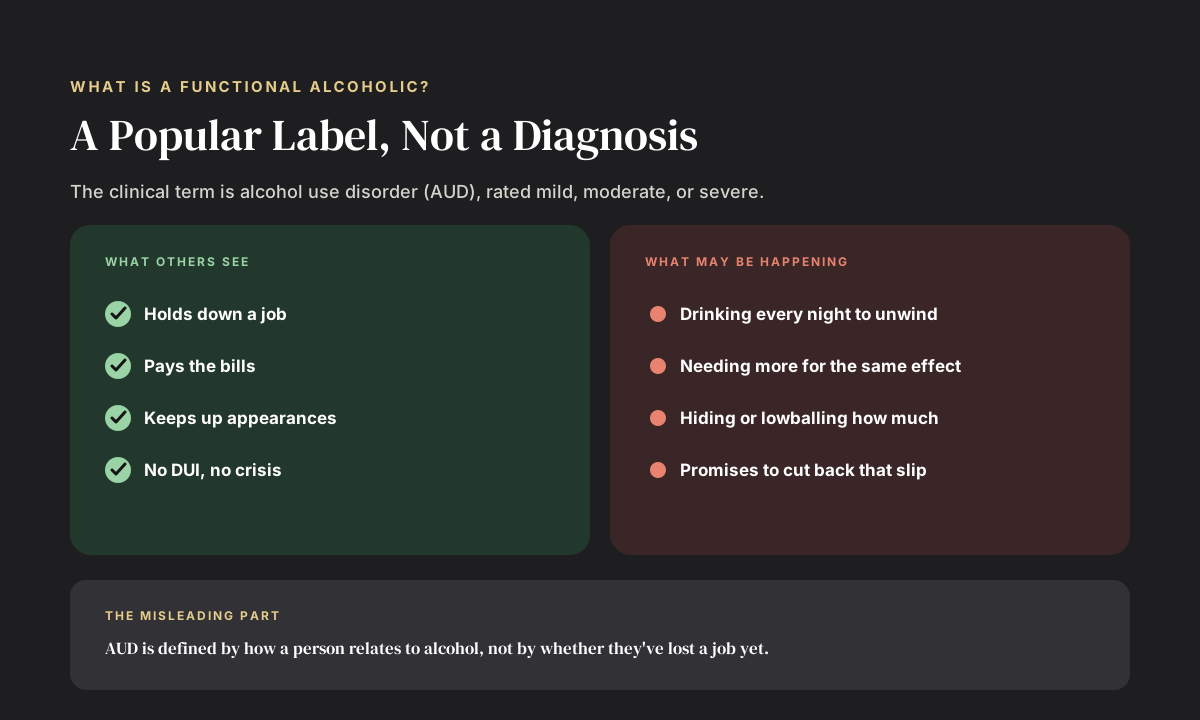
A functional alcoholic is a label people use for someone who is dependent on alcohol but still holds down a job, pays the bills, and keeps up appearances. You will also hear "functioning alcoholic" and "high functioning alcoholic." None of these are formal diagnoses.
The clinical term is alcohol use disorder. The National Institute on Alcohol Abuse and Alcoholism (NIAAA) describes and researches it, including how it is screened for and treated.[1] The word "functional" is the misleading part. It suggests the drinking is not a real problem because life has not fallen apart. But AUD is defined by how a person relates to alcohol, not by whether they have lost a job yet.
9 functional alcoholic signs hiding behind a successful life
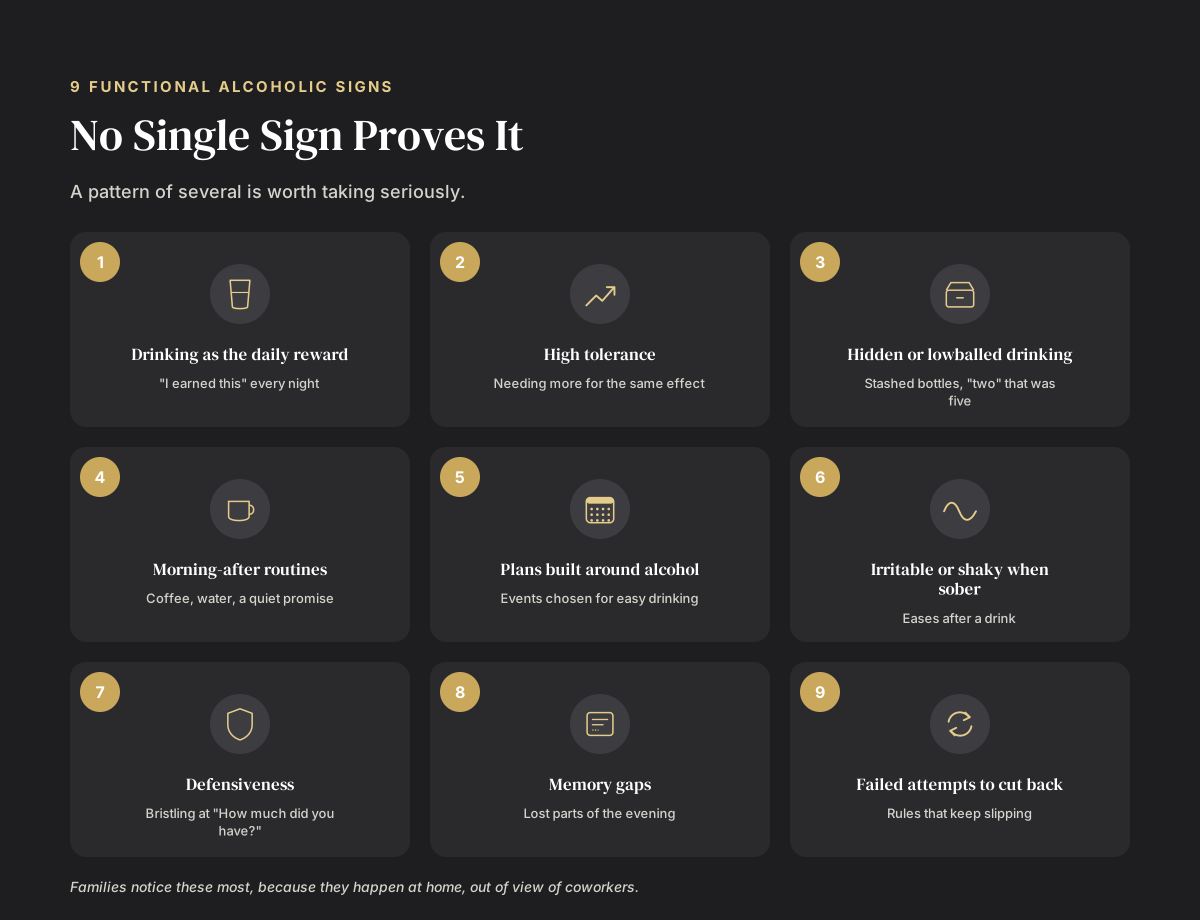
No single item below proves anything. A pattern of several is worth taking seriously.
Drinking is the daily reward. "I earned this" becomes the reason every night, not just after hard days.
High tolerance. Three or four drinks barely register. Needing more for the same effect is a physical change, not a sign of strength.
Hidden or lowballed drinking. Stashed bottles, drinking before a party, telling your spouse it was two when it was five.
Morning-after routines. Coffee, water, and a quiet promise to cut back, repeated most weeks.
Plans that revolve around alcohol. Choosing events, trips, and friends based on whether drinking is easy.
Irritability or shakiness when not drinking. Anxiety, sweating, poor sleep, or a short temper that eases after a drink.
Defensiveness. Bristling at a simple question like "How much did you have?"
Memory gaps. Forgetting parts of the evening while still seeming to function in the moment.
Failed attempts to cut back. "Dry January" that ended on January 9th, or rules (only wine, only weekends) that keep slipping.
Family members mention these signs of a functioning alcoholic most often, because they happen at home, out of view of coworkers.
Why functioning alcoholics often go unnoticed (and why denial persists)
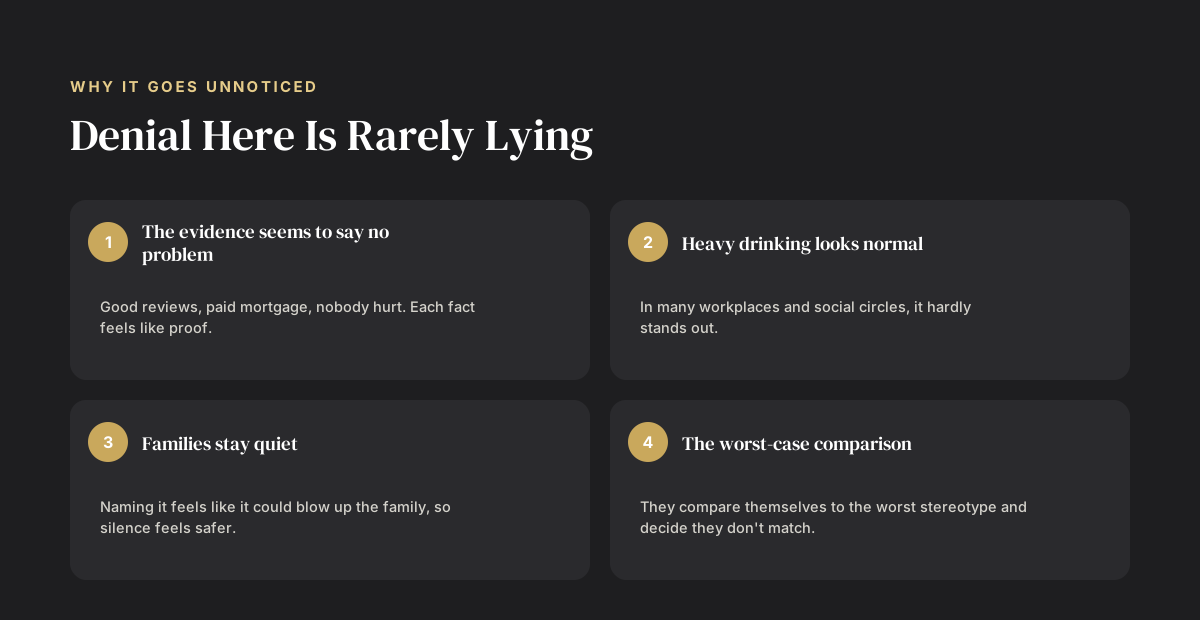
A high functioning alcoholic has a lot of evidence on their side. Reviews are good. The mortgage is paid. Nobody has been hurt. In the person's mind, each of those facts is proof that there is no problem.
Friends and family often go along without meaning to. Heavy drinking is normal in many workplaces and social circles, so it hardly stands out. Loved ones also fear that naming it will blow up the family. Silence feels safer, for a while.
Denial here is rarely lying. The person compares themselves to the worst stereotype they can imagine and decides they do not match.
The hidden health, relationship, and career risks of functioning alcoholism
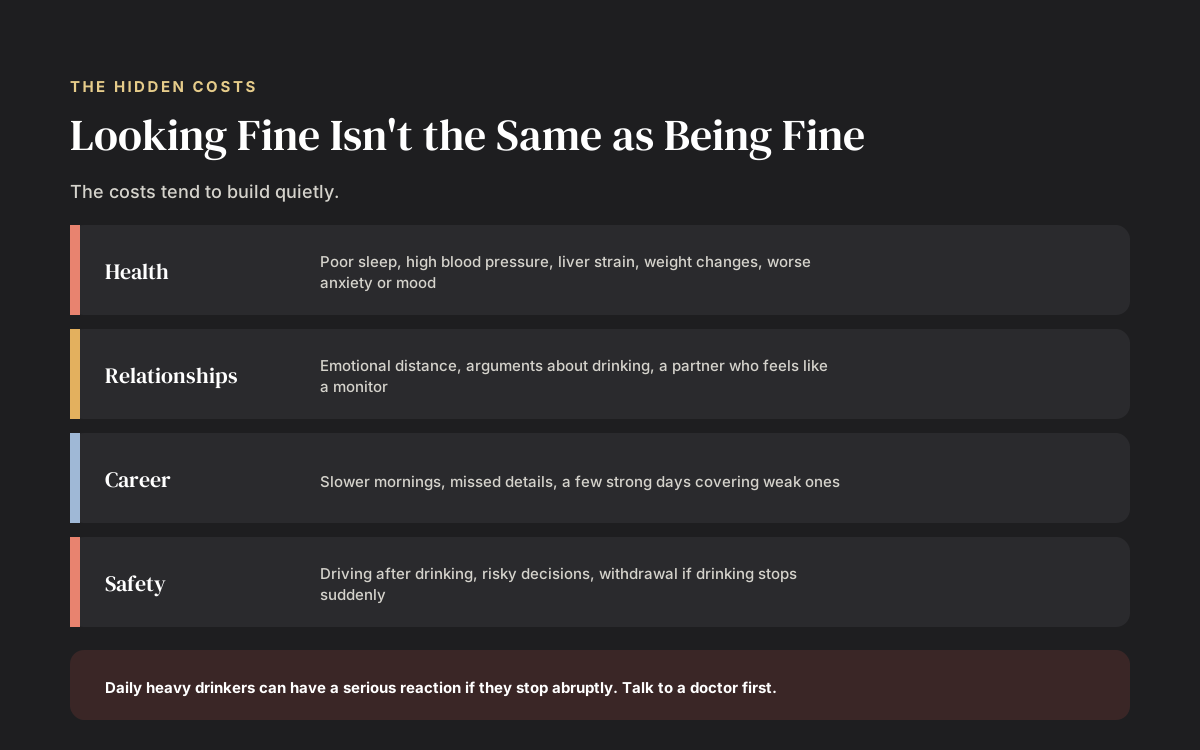
Looking fine is not the same as being fine. Functioning alcoholism still has costs, and they tend to build quietly.
Area | What it can look like |
|---|---|
Health | Poor sleep, high blood pressure, liver strain, weight changes, worsening anxiety or low mood |
Relationships | Emotional distance, arguments about drinking, a partner who feels like a parent or a monitor |
Career | Slower mornings, missed details, reliance on a few strong days to cover weak ones |
Safety | Driving after drinking, risky decisions, withdrawal if drinking stops suddenly |
Withdrawal deserves special attention. Someone who drinks heavily every day can have a serious reaction if they stop abruptly, which is why we wrote about whether you can safely detox from alcohol at home.
How alcohol use disorder is diagnosed: using DSM-5 criteria
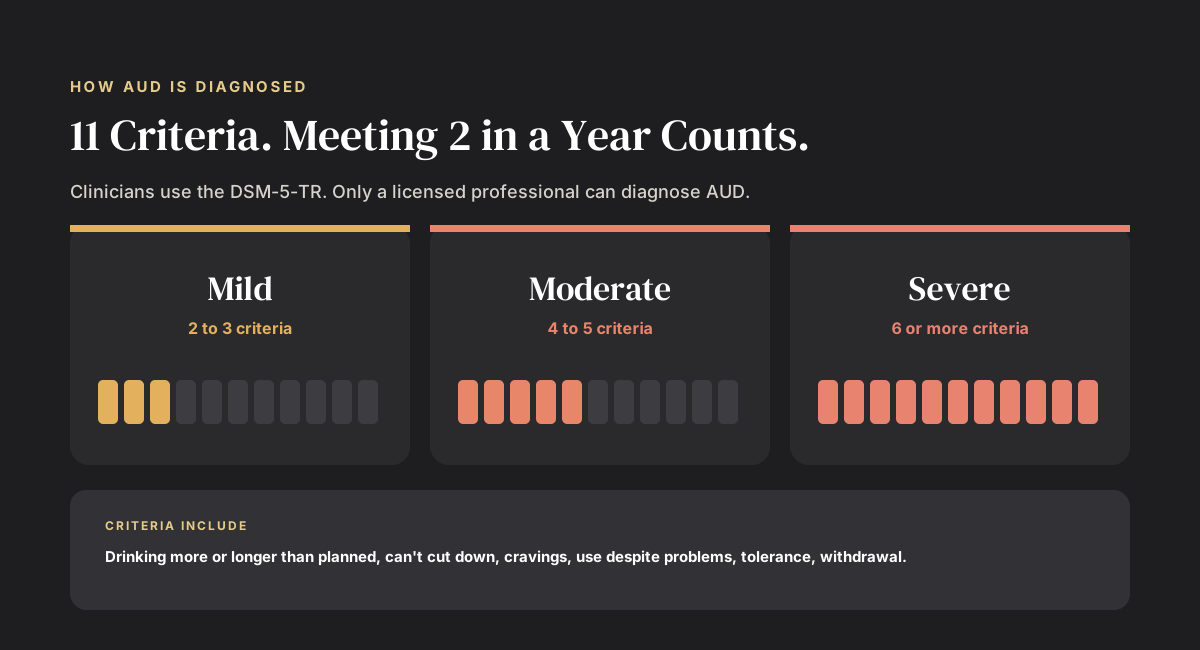
Clinicians in the United States use the Diagnostic and Statistical Manual of Mental Disorders (DSM-5-TR) to define and classify mental health conditions, AUD included.[2] The alcohol criteria include drinking more or longer than planned, wanting to cut down but not managing it, strong cravings, continued use despite problems, and withdrawal or tolerance.
The count matters. Meeting 2 or 3 criteria in the past year is considered mild AUD, 4 or 5 is moderate, and 6 or more is severe. So someone can have a real disorder without anything dramatic happening. Only a licensed professional can diagnose it, but you can use these criteria as a starting point for an honest self-check.
The American Society of Addiction Medicine (ASAM) publishes the ASAM Criteria, a set of guidelines clinicians use to match a person to the right level of care.[3]
How to talk to someone showing signs of a functioning alcoholic
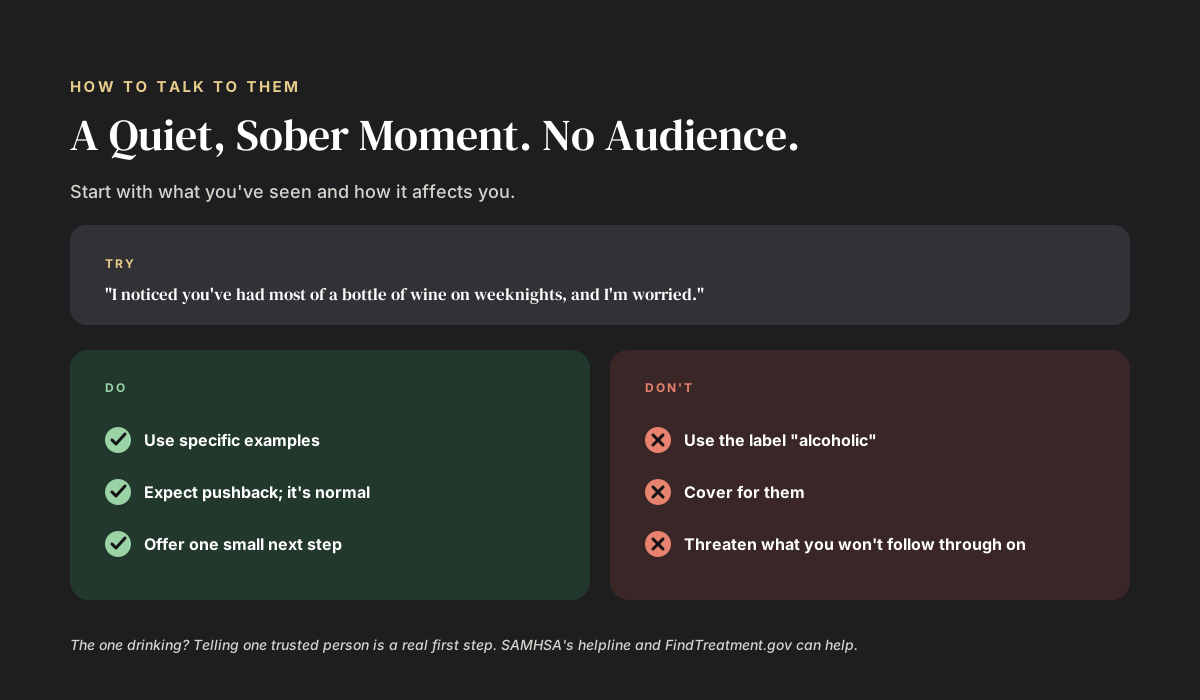
Pick a quiet, sober moment. Not after an argument, and not with an audience. Start with what you have seen and how it affects you: "I noticed you've had most of a bottle of wine on weeknights, and I'm worried."
Use specific examples, not labels. Skip "alcoholic."
Expect pushback. A first conversation rarely ends in agreement, and that is normal.
Do not cover for them, and do not threaten what you will not follow through on.
Offer a small next step, like a call to a doctor or a screening.
If you are the one drinking, telling one trusted person is a real first step. SAMHSA runs a National Helpline and the FindTreatment.gov locator for finding care near you.[4]
Treatment options and next steps at Double Peak Recovery
Double Peak Recovery is a six-bed facility in Escondido, CA, with medical detox and residential care under one roof. For many people with functional alcoholic signs, the first step is alcohol detox, where medical staff monitor withdrawal. You can see what that process looks like in our guide to medical detox timelines.
After detox, residential treatment gives you time away from daily triggers. If anxiety or depression is part of the picture, dual diagnosis treatment addresses both together. Some people with jobs and families step down to IOP and outpatient treatment, and our aftercare and alumni program continues support afterward. See all levels of care, and read how to pay for rehab in San Diego if cost is a worry.
Frequently Asked Questions
Q: What is a functional alcoholic, and is it an official diagnosis?
A: A functional alcoholic is someone with a drinking problem who still meets daily obligations like work and family. It is not an official diagnosis. The medical term is alcohol use disorder.
Q: What are the most common signs of a functioning alcoholic?
A: Daily drinking to unwind, high tolerance, hiding how much is consumed, defensiveness, memory gaps, and failed attempts to cut back. Several together form a pattern worth getting checked.
Q: Can someone be a high functioning alcoholic and still have alcohol use disorder?
A: Yes. Being high functioning describes how a person looks from outside. AUD is diagnosed by criteria such as cravings, tolerance, and drinking despite problems, and meeting two in a year qualifies as mild.[2]
Q: How do I talk to a loved one who seems successful but I think is drinking too much?
A: Choose a private, sober moment, describe specific things you have seen, say you are worried, and avoid labels. Expect resistance and plan to return to the conversation.
Q: What treatment options are available for a high functioning alcoholic?
A: Options include medical detox, residential treatment, dual diagnosis care, intensive outpatient programs, and aftercare. A clinical assessment helps match the level of care to the person.[3]
Conclusion
Functional alcoholic signs are easy to excuse because the life around them looks good. But a steady pattern of nightly drinking, hiding, rising tolerance, and failed promises to cut back is worth acting on, whether or not anything has "gone wrong" yet. If you recognize yourself or someone you love here, contact Double Peak Recovery at doublepeakrecovery.com. We can talk through what you are seeing and what a first step could look like, including whether you need alcohol rehabilitation in Escondido. Calling does not commit you to anything.
References
National Institute on Alcohol Abuse and Alcoholism. National Institute on Alcohol Abuse and Alcoholism (NIAAA). https://www.niaaa.nih.gov
American Psychiatric Association. Psychiatry.org - DSM. https://www.psychiatry.org/psychiatrists/practice/dsm
American Society of Addiction Medicine. ASAM - American Society of Addiction Medicine. https://www.asam.org
Substance Abuse and Mental Health Services Administration. Home | SAMHSA. https://www.samhsa.gov