9 min read
Cocaine Withdrawal Symptoms: 12 Physical, Emotional, and Psychological Signs to Recognize
Cocaine withdrawal symptoms include fatigue, deep low mood, and strong cravings. Learn 12 signs, what the timeline looks like, and when to get help.

Medically reviewed by Dr. Asad R. Hussain, M.D.
Board-certified psychiatrist · Medical Director · Last reviewed
TL;DR
Cocaine withdrawal symptoms are mostly emotional and mental: a heavy crash, low mood, anxiety, poor sleep, and intense cravings.
Withdrawal from cocaine is rarely dangerous in the way alcohol withdrawal can be, but the depression and suicidal thoughts that can come with it are a real risk.
Most people feel the worst of the crash in the first week, while mood, sleep, and cravings can take weeks to settle.
If you or someone you love has thoughts of self-harm, call or text 988 right away.
Supervised detox and a plan for what comes next lower the odds of relapse during the hardest days.
Table of Contents
Cocaine withdrawal timeline: what to expect and how long it lasts
When cocaine withdrawal becomes a warning sign: risks and safety concerns
Introduction
You stopped using, or you ran out, and now you feel like something has been switched off. You are exhausted but cannot sleep well. Nothing is fun. Your head keeps telling you one thing would fix it. That is what cocaine withdrawal symptoms often look like from the inside.
If you are watching someone you love go through this, it can look like laziness or a bad attitude. It is neither. It is the brain readjusting after cocaine, and it is a medical condition that can be recognized and treated. Below are 12 signs, a realistic timeline, the warning signs that mean you should not wait, and how Double Peak Recovery in Escondido, CA helps people through it.
What is cocaine withdrawal and why does it happen?
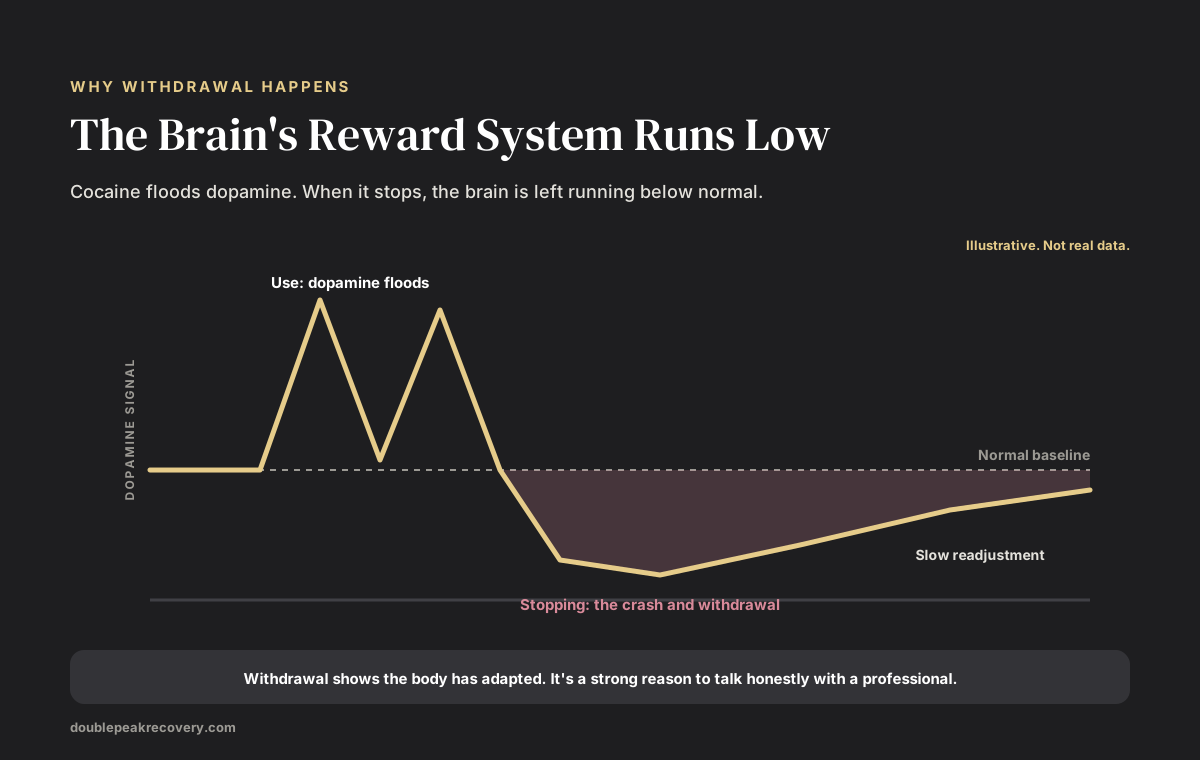
Cocaine raises the amount of dopamine, the brain chemical tied to pleasure and motivation, by blocking its normal recycling. With regular use, the brain adjusts to that flood. When cocaine stops, the brain is left running low on the chemicals that make you feel rewarded and awake.
That gap is withdrawal. It also shows that the body has adapted to the drug, which is one thing clinicians look for when they assess a substance use disorder. The standard diagnostic reference is the American Psychiatric Association's DSM-5-TR, which clinicians in the United States use to define and classify mental disorders.[1] Having cocaine withdrawal symptoms does not by itself mean you have a use disorder, but it is a strong reason to have an honest conversation with a professional.
Physical cocaine withdrawal symptoms to recognize
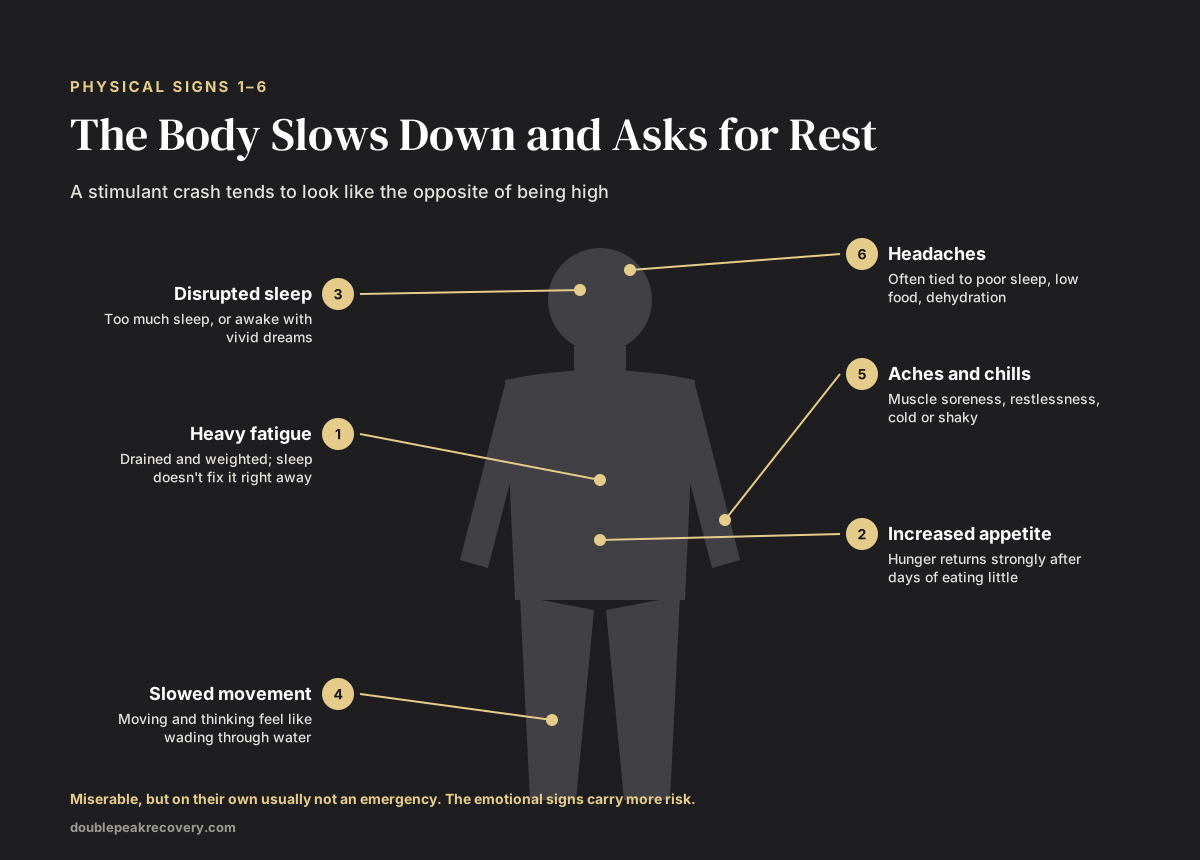
Cocaine is a stimulant, so the physical side of withdrawal tends to look like the opposite of being high. The body slows down and asks for rest. These are the physical symptoms people report most often:
1. Heavy fatigue. A drained, weighted feeling that sleep does not fix right away.
2. Increased appetite. Hunger returns, often strongly, after days of eating little.
3. Disrupted sleep. Some people sleep far too much at first. Others lie awake with vivid, unpleasant dreams.
4. Slowed movement. Moving and thinking feel like wading through water.
5. Aches and chills. Muscle soreness, restlessness, and feeling cold or shaky.
6. Headaches. Often tied to poor sleep, low food intake, and dehydration.
These feel miserable, but on their own they are usually not what sends someone to an emergency room. The emotional signs are where the greater risk sits.
Emotional and psychological signs of cocaine withdrawal
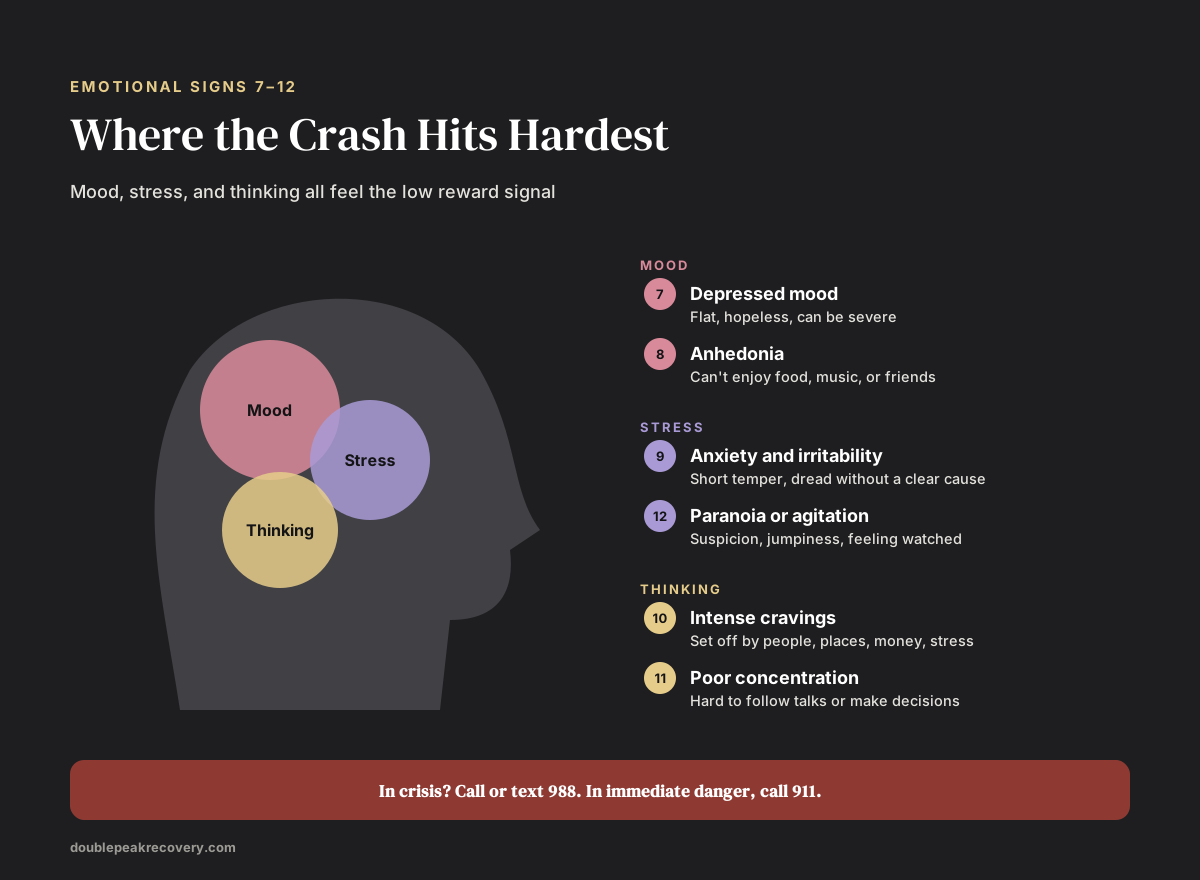
For most people, the emotional symptoms are the hardest part. The brain's reward system is running low, and that shows up in mood, thinking, and behavior.
7. Depressed mood. A flat, hopeless feeling that can be severe.
8. Anhedonia. This is the clinical word for being unable to enjoy things that used to feel good, like food, music, or friends.
9. Anxiety and irritability. Short temper, restlessness, a sense of dread without a clear cause.
10. Intense cravings. Strong urges, often set off by people, places, money, or stress.
11. Poor concentration. Trouble following a conversation, finishing tasks, or making simple decisions.
12. Paranoia or agitation. Suspicion, jumpiness, or feeling watched, especially after heavy or long-term use.
If you or a loved one has thoughts of suicide, treat it as urgent. Call or text 988, the Suicide & Crisis Lifeline, which SAMHSA lists among its national helplines.[2]
Cocaine withdrawal timeline: what to expect and how long it lasts
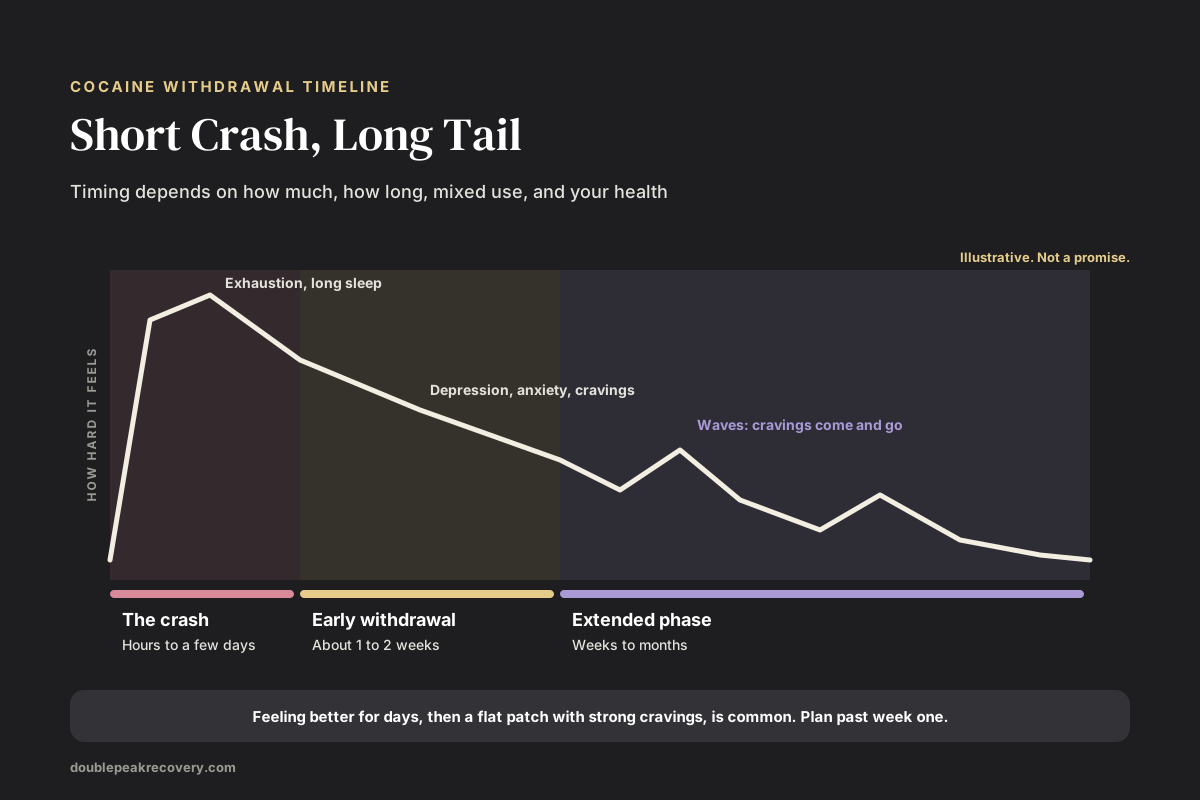
Timing varies with how much you used, how long, whether you mixed cocaine with alcohol or other drugs, and your own health. The table below is a general pattern, not a promise. For how a stimulant comedown unfolds with a related drug, see our piece on the meth withdrawal timeline.
Phase | Typical timing | What it often looks like |
|---|---|---|
The crash | First hours to a few days | Exhaustion, long sleep, big appetite, low mood, agitation |
Early withdrawal | About one to two weeks | Depression, anxiety, poor sleep, strong cravings |
Extended phase | Weeks to months | Waves of low mood, reduced pleasure, cravings that come and go |
The long tail catches people off guard. You can feel better for several days and then hit a flat patch with strong cravings. That is common, and it is one reason a plan beyond the first week matters. Our medical detox timelines guide explains how detox stages are organized more broadly.
When cocaine withdrawal becomes a warning sign: risks and safety concerns
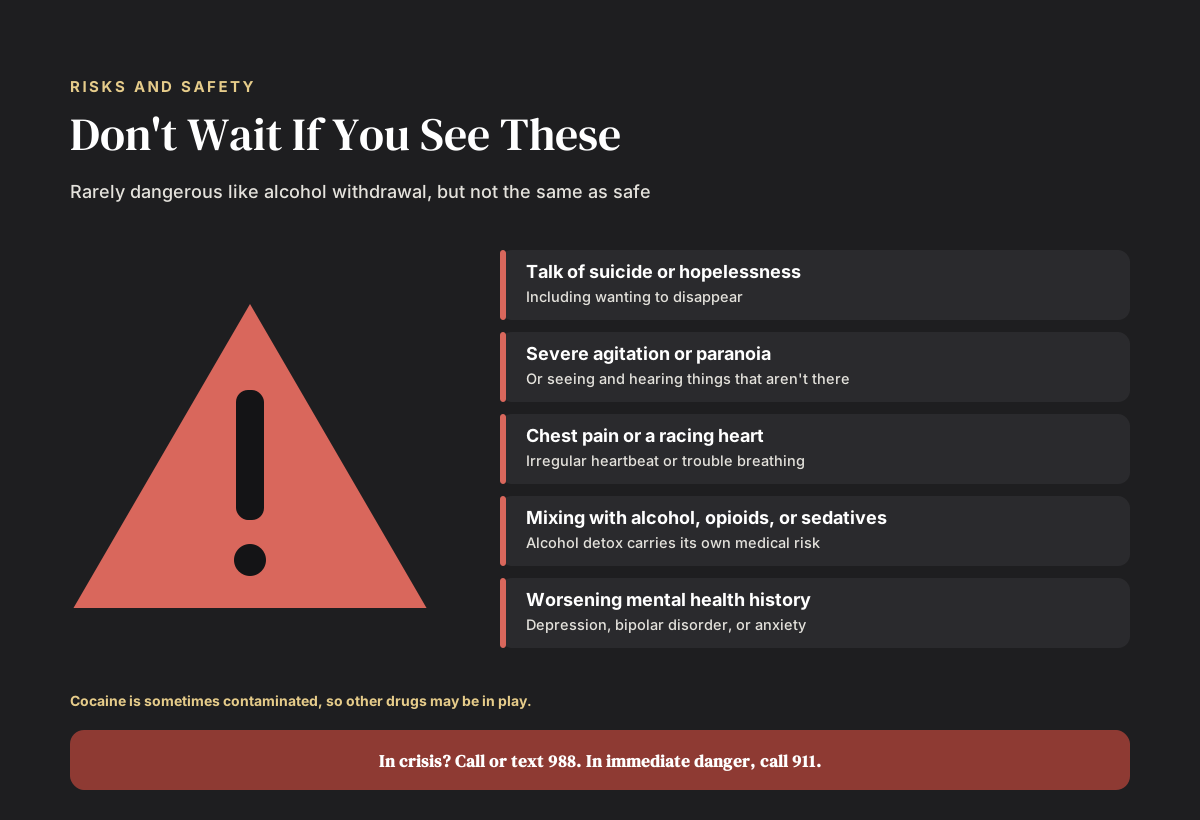
Cocaine withdrawal is not usually life-threatening the way alcohol or benzodiazepine withdrawal can be. That is not the same as safe. The danger comes from what the crash does to mood and judgment, and from what else is in the person's system.
Get help right away if you see any of these:
Talk of suicide, hopelessness, or wanting to disappear
Severe agitation, paranoia, or hearing or seeing things that are not there
Chest pain, a racing or irregular heartbeat, or trouble breathing
Use of alcohol, opioids, or sedatives alongside cocaine
A history of depression, bipolar disorder, or anxiety that is getting worse
Mixed use deserves special attention. Someone who also drinks heavily may need alcohol detox, which does carry medical risk. Our article on detoxing from alcohol at home explains why. Cocaine is also sometimes contaminated, so a person who thinks they only use cocaine may be exposed to other drugs.
Why professional treatment supports safer recovery
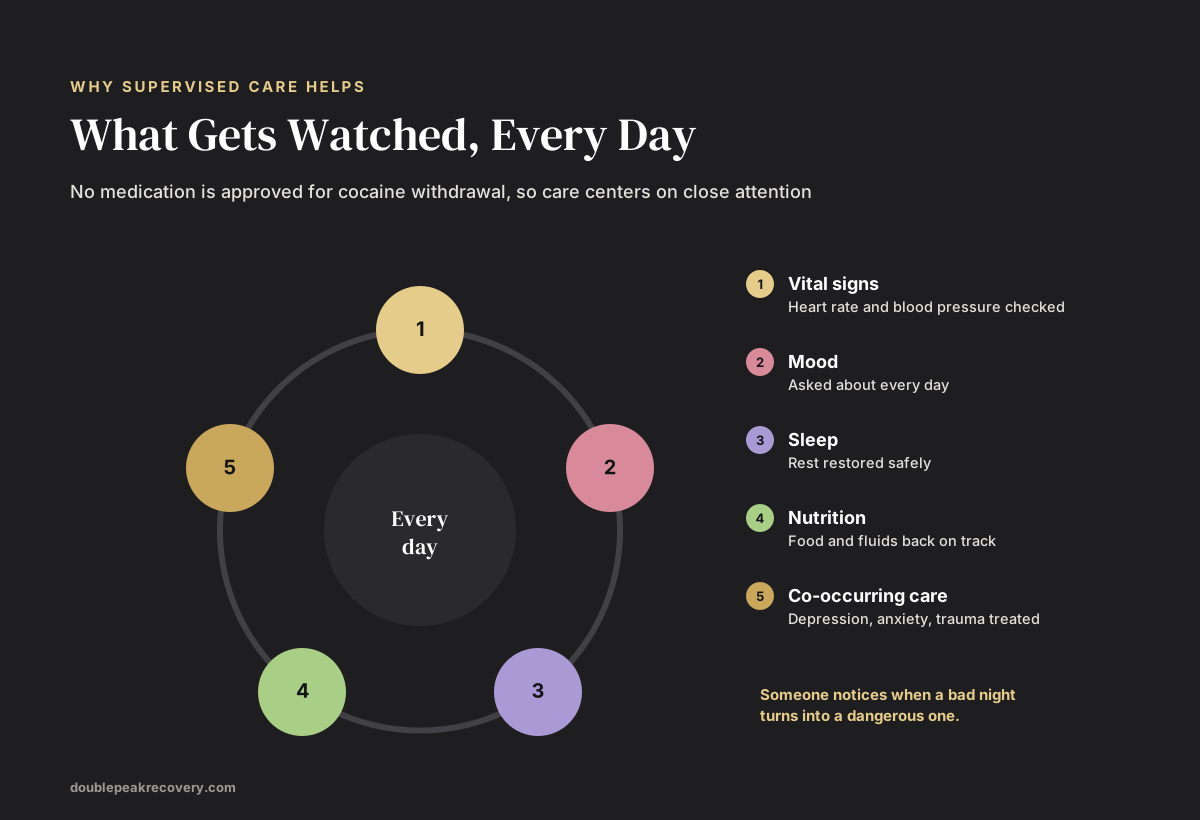
No single medication is approved to treat cocaine withdrawal, so care focuses on monitoring, comfort, sleep, nutrition, and treating mood symptoms as they appear. The American Society of Addiction Medicine, a medical society of more than 8,000 physicians and clinicians who specialize in addiction medicine, publishes the ASAM Criteria, a set of guidelines for building person-centered treatment plans for people with addiction and co-occurring conditions.[3]
In practice, someone checks your vital signs, asks about your mood every day, and notices when a bad night turns into a dangerous one. Depression, anxiety, or trauma that was there before the cocaine gets treated, not ignored. SAMHSA's treatment resources are a good place to start if you want to look at options near you.[2]
Getting help at Double Peak Recovery
Double Peak Recovery is a six-bed treatment facility in Escondido, CA. Because it is small, you are known by name. Our meth and cocaine detox is part of our broader medical detox programs, with clinical staff watching your physical health and your mood through the hardest days.
After detox, most people need more than a few days of rest. You can step into residential treatment, and if depression or anxiety is part of the picture, dual diagnosis treatment addresses both together. Step-down options include IOP and outpatient treatment and the aftercare and alumni program. You can see how these fit together on our levels of care page, and what to pack in our first-week checklist. Worried about cost? Read 7 ways to pay for rehab in San Diego.
Frequently Asked Questions
Q: What are the most common cocaine withdrawal symptoms?
A: The most common cocaine withdrawal symptoms are heavy fatigue, depressed mood, anxiety, irritability, disrupted sleep, increased appetite, trouble concentrating, and strong cravings. Mood and energy changes tend to be more noticeable than physical pain.
Q: How long do cocaine withdrawal symptoms last?
A: The crash usually peaks in the first several days, and early withdrawal often lasts one to two weeks. Low mood, poor sleep, and cravings can come and go for weeks or longer. Your timeline depends on how much and how long you used.
Q: Is cocaine withdrawal dangerous or life-threatening?
A: Cocaine withdrawal itself is less likely to cause medical emergencies than alcohol withdrawal. The serious risks are severe depression, suicidal thoughts, paranoia, and relapse. If you have thoughts of self-harm, call or text 988 immediately.
Q: Can I detox from cocaine at home, or do I need medical supervision?
A: Some people get through it at home, but it is risky if you have depression, use other substances, or have relapsed before. Supervised detox gives you daily monitoring, a safe place away from triggers, and a plan for what happens next.
Q: How can I help a loved one who is experiencing cocaine withdrawal?
A: Stay calm, ask directly about their mood and any thoughts of suicide, and encourage food, water, and rest. Do not argue about the past during the crash. Offer to help them contact a treatment provider, and call 988 or 911 if you believe they are in danger.
Conclusion
Cocaine withdrawal symptoms are real, they follow a recognizable pattern, and they pass. The crash is brutal but short. The low mood and cravings are slower, and that is where support makes the biggest difference. If you recognize several of the 12 signs above in yourself or someone close to you, do not wait for a worse day. Call Double Peak Recovery in Escondido, CA, or visit doublepeakrecovery.com, and talk to someone who can tell you what the next step looks like.
References
American Psychiatric Association. Diagnostic and Statistical Manual of Mental Disorders (DSM-5-TR). https://www.psychiatry.org/psychiatrists/practice/dsm
Substance Abuse and Mental Health Services Administration. Substance Use Disorder Treatment. https://www.samhsa.gov/substance-use/treatment
American Society of Addiction Medicine. ASAM, American Society of Addiction Medicine. https://www.asam.org